Showing posts with label Soufrière. Show all posts

Sunday, March 25, 2012

Dinners & Lahars

The end of term is quickly approaching, and with all of next week taken up by sports activities at Montserrat Secondary School, I have finished all my teaching for this term. Speaking of which, it's been astoundingly fast how my time here has flown; it's hard to believe that I've been here for nearly three months now and I still find this island as fascinating as I did when I first arrived.

A lot of people who've lived here for awhile say that Montserrat is amazing to visit, but sometimes a challenge to live in. I'm not going to start weighing the pros and cons here, but I think having a purpose whilst living here does make it more enjoyable, and in my case this is proven to be a worthwhile effort. The Montserrat Youth Choir did another stellar performance, this time for the Rotary charter dinner which was held to raise funds for music resources on the island. The choir certainly did me proud, and I think they have managed to convince guests that their money will be certainly put into a worthy cause.

Demand for instrumental teaching continues to grow, but so far I have been stretched in terms of being able to offer individual one-to-one keyboard and piano lessons after school. I will be touching on this issue in my end of term report to the ministry, as I feel quite strongly about being able to equip students with basic instrumental skills in order to encourage them to explore their own musicality.

Earlier this month a group of MVO staff and myself (no, I'm not affiliated with MVO in any way) drove up the Belham river valley - for me, it was more of a sightseeing trip, but the MVO staff were there to take photos as part of some ongoing research. The Belham valley truly is an impressive sight - it has been devastated be repeated lahar flow, and much of what used to stand in the valley, such as hotels, villas and an entire golf course, are now buried under about 35 feet of hardened mud.

Lahar flows are deadly because of their energy and speed. Large lahar flows move at approximately sixty miles an hour, can flow for more than one hundred and ninety miles, and can cause catastrophic destruction in their path. The lahars from the Nevado del Ruiz eruption in Colombia in 1985 caused the Armero tragedy, which killed an estimated 23,000 when the city of Armero was buried under sixteen feet of mud and debris. New Zealand's Tangiwai disaster in 1953, where 151 people died after a Christmas Eve express train fell into the Whangaehu River, was caused by a lahar.

Here is a video containing some of the sights and sounds (ie. very loud, strong winds) which I captured on the Belham.


Having seen the valley from certain viewpoints previously did not quite prepare me for the scale of standing in the middle of it. Two days ago, the volcano started venting ash, reaching about 6,000 feet above sea level, approximately 3,000 feet above the volcano) - this activity was similar to activity previously observed prior to heavier volcanic activity, as last observed in 2008. However, the volcano has since calmed down, so I suppose that's about all the 'excitement' I'll get to witness.
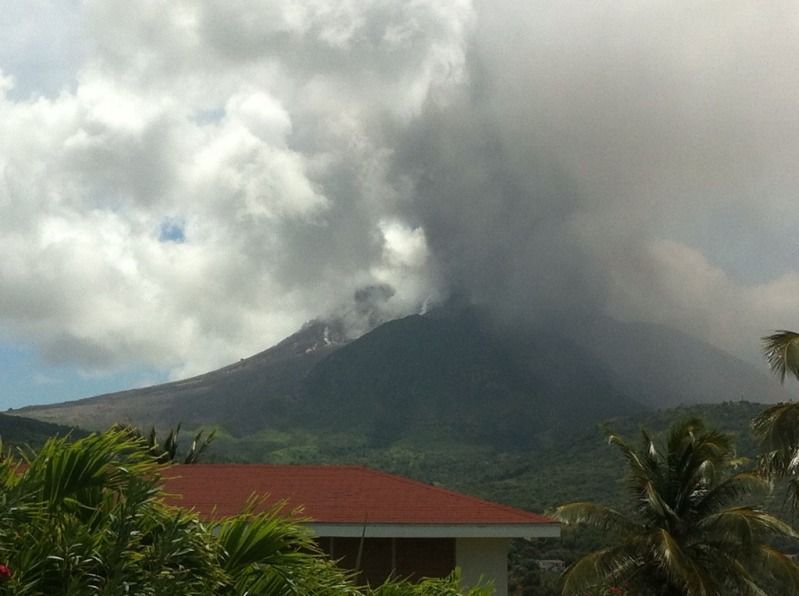
Soufriere Hills Volcano venting ash.

I drove to Old Towne during my lunch break on Friday to snap this photo, being quite excited about witnessing volcanic activity (however mild). However, the locals didn't even bat an eyelid - and after seeing what has happened to the Belham river valley, I'm not surprised.

Friday, February 17, 2012

Volcanoes & Work schemes


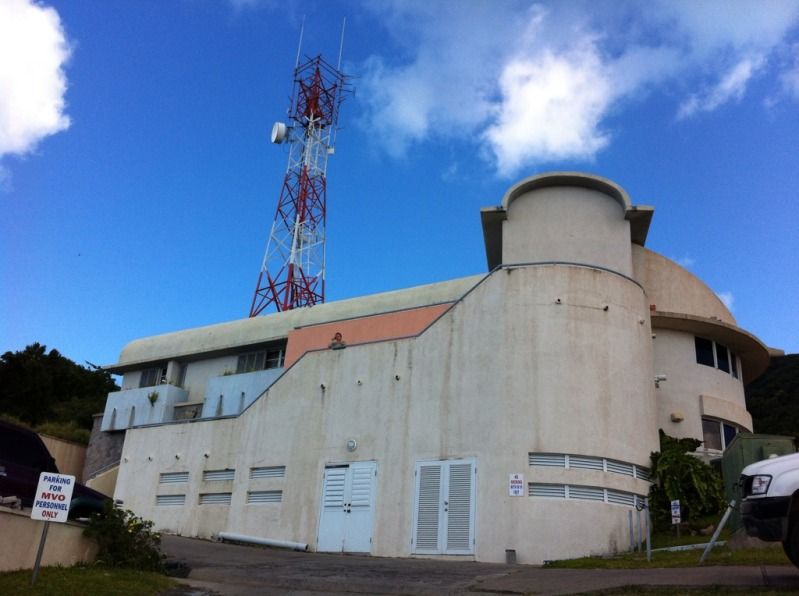
After six weeks on the island, I finally made a trip up to the Montserrat Volcano Observatory (MVO) to pay a visit. Having got to know quite a few scientists and staff who work at MVO, I thought it would be nice to spend my half term holiday up at MVO to see what actually goes on there. Half term here, by the way, is one day. Not one week. Gotta learn how to treasure it!

The MVO's main function, as you can imagine, is to closely monitor volcanic activity coming from the Soufriere Hills volcano, as well as issue travel advisories for the exclusion zone. Although pyroclastic activity has more or less ceased today and eruption continues on a much reduced scale (such as a few rockfalls, etc.), Soufriere Hills has in the past caught Montserrat and its residents by surprise on a number of occasions - with the most severe impact being, of course, the eruption on 25 June 1997 which resulted in the deaths of nineteen people.

Since its eruption began, the volcano has become one of the most closely monitored volcanoes in the world. The MVO takes detailed measurements and reports on its activity to the government and people of Montserrat. A typical MVO visit consists of a self-guided tour and activities include poster displays detailing information about past volcanic activity, a short documentary film and displays of rocks, ash and other artefacts. And of course, stunning views of Soufriere Hills

On approach to the MVO.

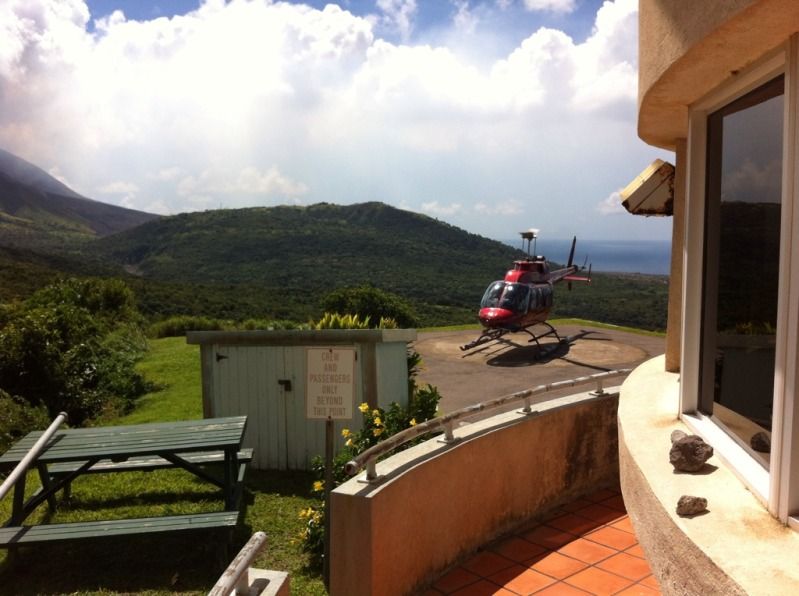
Every Friday is helicopter day.

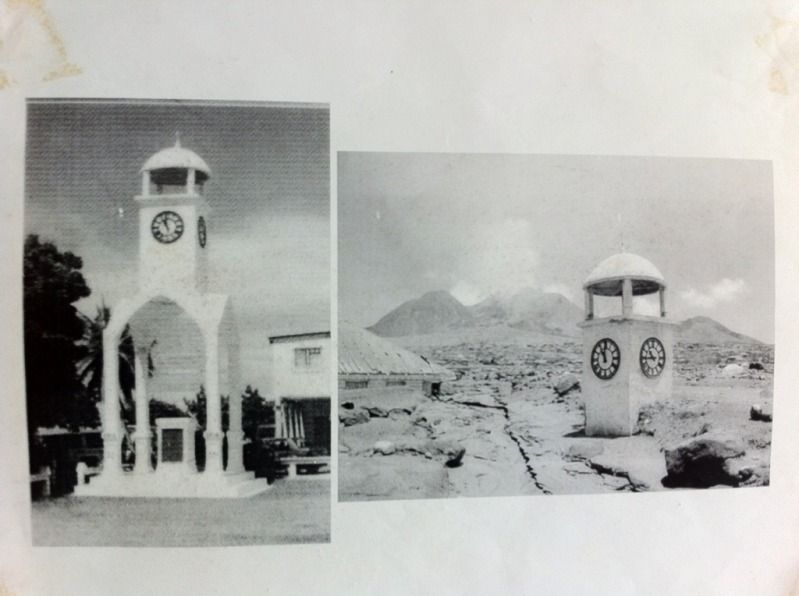
A stark example of how pyroclastic flow destroyed Plymouth.

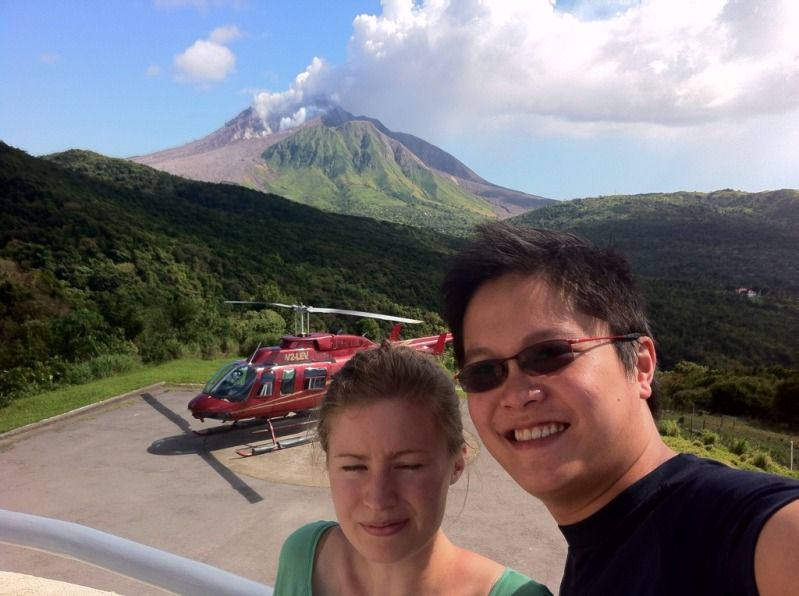
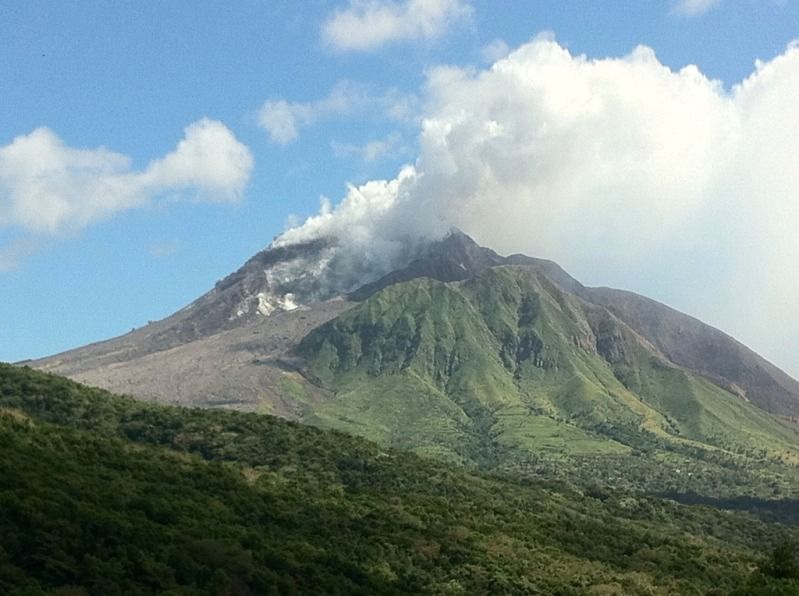
A relatively clear day for volcano admiring.

With Mel, one of the MVO volunteers.

The documentary film was very informative, and showed impressive scenes of Soufriere Hills at its peak in activity - it's hard to imagine how this calm, beautiful scene today can in fact be so immensely beguiling. Compare this to when it was erupting back in 1995 with these pictures here and here.

This past week has gone by relatively quick - with no teaching on Wednesday and Friday due to Parents' Day and half term respectively. I met quite a number of parents on Wednesday, and so far all the feedback has been really positive and encouraging. In actual fact, I realize that the focus what I came here to do initially has shifted quite a bit. Prior to starting work here, I thought I would be running a more after-school based music programme and service. However, the focus has now changed to establishing a music curriculum for Montserrat Secondary School, and implementing a work scheme to be delivered in classrooms.

A lot of this sounds very education- and teacher-based, and it has been indeed. At the moment I am planning and delivering lesson plans for Years 7-9, spread out to a total of 10 different classes. Compared to a normal teaching timetable back home, this is definitely more than a normal full teaching timetable. Combine that with after-school activities such as choir and peripatetic teaching, this translates to a lot of hours spent solely with MSS.

However, given the current state of music education and outreach on the island, it would be hard to establish a 'wider ops'-styled programme when the nucleus of formal music education in schools is yet to be properly established. I have decided that my main aim, for MSS at least, is to sustain a keen level of interest amongst students so that they continuing taking music as a subject option and, finally, take music as an O-level subject in their CXC examinations in Year 11.

This will require a constant occupancy of the role of music specialist in MSS, and I hope this is something that the Foundation is willing to support in the years to come. Having being trained in music education and outreach, as well as workshop skills, has nonetheless helped me immensely in delivering a music curriculum in the classroom - combing different teaching methods and approaches seems to have spurred continual interest amongst students, even though the topics covered could be as basic as music notation.

The current plan is to widen the music subject to Years 10 & 11 as well, however I think this will require at least two full time music specialists within MSS - just like any other regular school in the UK. I think there is a very fine line between 'music teacher' and 'wider-ops workshop leader' here, although I have found both roles to be quite interchangeable most of the time.

In other community-based project news, rehearsals for Volpanics is now in full swing and I'm now in the midst of doing up an arrangement for Big Spender on pan orchestra - which I'm quite excited about. I am also drawing up a proposal to conduct CPD weekends for professional musicians, music educators and music practitioners in Montserrat. Truth be told, setting up new projects can be quite a lengthy affair - ministry officials seem to have quite a pre-defined mindset about how music education, activities and programmes should be conducted, and any new projects always seem to be met with quite a lot of initial apprehension.

I shall now leave you with other scenes I've recently encountered over here - and since a royal visit is approaching, here's an apt photo of Prince of Wales & Duchess of Cornwall's guestbook entry in Government House, the official residence of the governor of Montserrat.

Charles and Camilla leave their mark.

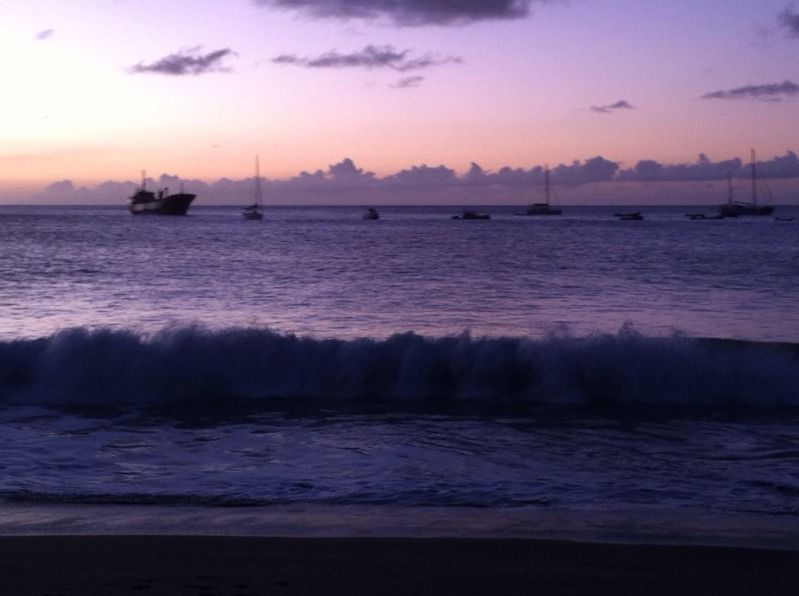
Sunset at Little Bay on Valentine's Day

Tomorrow marks the fifth round of Montserrat Idol - things certainly are heating up! Should you find yourself curious about the ongoings, you can watch scenes on PTVMontserratIdol.com and catch the live stream every Saturday at 1am UTC.

Monday, January 30, 2012

Canepiece & Sandy Bottom

Over the weekend I had the chance to get out and stretch my legs in the great outdoors of Montserrat. With Gerren as my guide, we walked up Silver Hills - a range of hills at the northern end of the island. A relatively easy trail, it took about two hours for a return trek and offered many scenic views. At the summit is an antennae array used by LIME (the local telecom and mobile provider), the MVO and the airport. I could also see most of the inhabitable area of Montserrat, with the volcano in the background masked by quite heavy cloud cover.

On the way we spotted some feral goats and a well-hidden pig farm. The wild boars that occasionally roam the area which I were warned about didn't make their presence felt, though.

Some rather striking local flora.

Some of the scenic views on offer en route up to Silver Hill.

The rooftop of an antennae array building at the summit.

Probably the least of your worries should you lose your footing.

Being the hilly island that it is, Montserrat boasts quite a number of hiking trails. And from this first sneak peek of the hills, I look forward to start ticking all of them off one by one. Montserrat also has quite a fair few number of beaches which, due to the prevalence of cliffs, are only accessible by boat. Currently, the only way to get a proper grand view of Soufrière Hills seems to be helicopter - once a week the MVO gets a helicopter in from Antigua to access monitoring equipment near the volcano, and I hear it might be possible to hitch a lift on one of those rides.


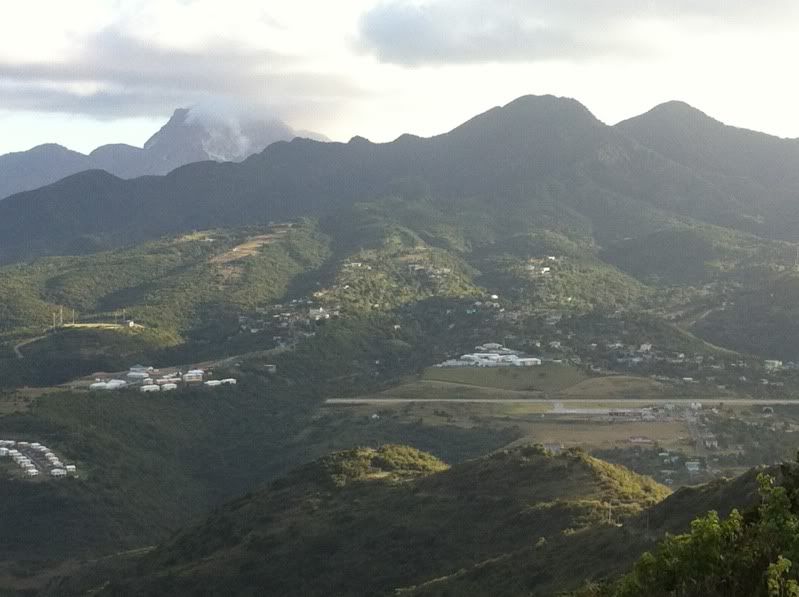
And I shall leave you with a scenic view of the northern part of Montserrat seen from the summit of Silver Hill. On the leftmost edge of the picture, with the row of houses curving out, is part of Lookout - a recent housing development area. The thin strip of 'road' at the right-hand side is actually the airport runway, with Glendon hospital slightly towards the back. Soufrière Hills is in the background, covered by clouds.