Of course, I am certain the potential groundwork seems massive - but having lived in a small(ish) island community, leading and supporting music education schemes, I must admit it is very relentless but rewarding work. Montserrat is only but one of the 14 OTs around the world, ranging from large, populated islands like Bermuda and the Cayman Islands - both well known for tourism and the occasional tax evasion - to smaller, isolated islands such as the Falkland Islands and Pitcairn Islands.
At pop. 67 (2011 est.), Pitcairn is the least populous jurisdiction in the world. The main island is the only inhabited one, with three other small islands making up the group of Pitcairn Islands. With no airstrip and a nearly-perpetually tumultuous bay, the only access to the island is an overnight journey by sea from the other nearest landmass, Mangareva, French Polynesia - 300 miles away. The regular ship that services the island (bringing island stores and occasionally, tourists) makes only two return trips every three months.
There is only one school on the island (pre-school and primary), with what I guess appears to be between 5-7 pupils overseen by a qualified teacher appointed from New Zealand. Each teaching contract in Pitcairn lasts for two years, and other duties include editing the Pitcairn Miscellany, a monthly newsletter filled with island happenings, ship arrivals and local gossip.
And it's this newsletter that I have been rather absorbed with recently - it's like reading a local newspaper about a family living in a somewhat Swiss Family Robinson-esque fashion. Add that to Pitcairn's somewhat illustrious history - Pitcairners are mostly descendants of the Bounty mutineers and the Tahitians who accompanied them - and charming isolation, I have been quite fascinated with the inner workings of such a close-knit community. Which brings me back to the idea of possibly setting up some form of collaborative project with the students on Pitcairn, perhaps starting with my new students in my upcoming job at St John's next academic year.
For those who might be interested in a glimpse of a country populated by only (approx.) 67 people, sharing a newly-upgraded 1 Mbps satellite internet connection and living with 14-hour electricity cycle per day and only one privately-owned car on the island, you can read the latest copy of the Pitcairn Miscellany which I have uploaded here. Regular subscription costs US$15 per year. Pitcairn is now trying to expand tourism to the island, reaching out to the numerous cruise ships that sometimes call whilst traversing the Atlantic. However, access to the bay is extremely weather-dependant and it's never a guarantee that you will be able to set foot on the island after your lengthy journey.
Of course, if you think the work gossip in your office building was bad enough, think again. Pitcairn is also no stranger to controversy, having come into the spotlight for the 2004 sexual assault trials where charges were laid against seven men living on the island and six living abroad, including the island's mayor at that time. All but one of the defendants were found guilty, some with multiple counts of sexual attacks of children, and were housed in a converted prison set up by the British government. Particular consideration in sentencing had to be given due to the fact that if too many able-bodied men were incarcerated for too long, the island would essentially cease to function properly. Talk about a serious case of cabin fever.
The beguiling charm of Pitcairn still holds steadfast, however, and short of obtaining my own sailing yacht and traipse across the Atlantic, I shall content myself to the role of couch traveller and perhaps get to work on seeing that collaborative project through. Who knows, if this is successful, the next step could be Ascension Island (pop. 1,122) or Tristan da Cunha (pop. 264). Interestingly, Tristan da Cunha, while being the most isolated inhabited island in the world, already has an ongoing music collaborative project between the island's school and amateur composers in England, led by a certain music teacher named Tony Triggs.
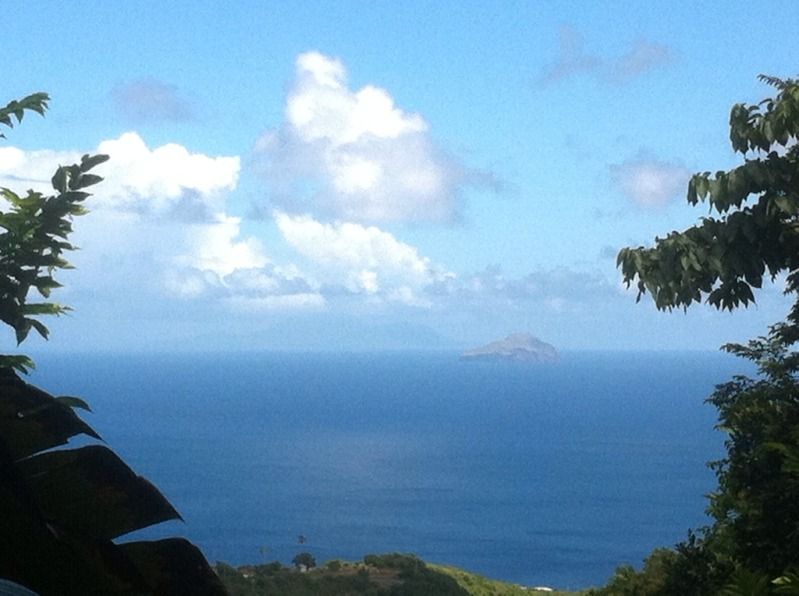
In other more local news, I have been doing a bit more trekking around Monty, doing some last-minute exploration of nature before I leave. Last Sunday, Sonja kindly agreed to take me on the trail to the dry waterfall, with Pepper tagging along. It was a mildly easy, 3-hour return trek which culminated with the dry waterfall looming over a the wide and rocky Soldier Ghaut - most impressive. A few photos from the morning.
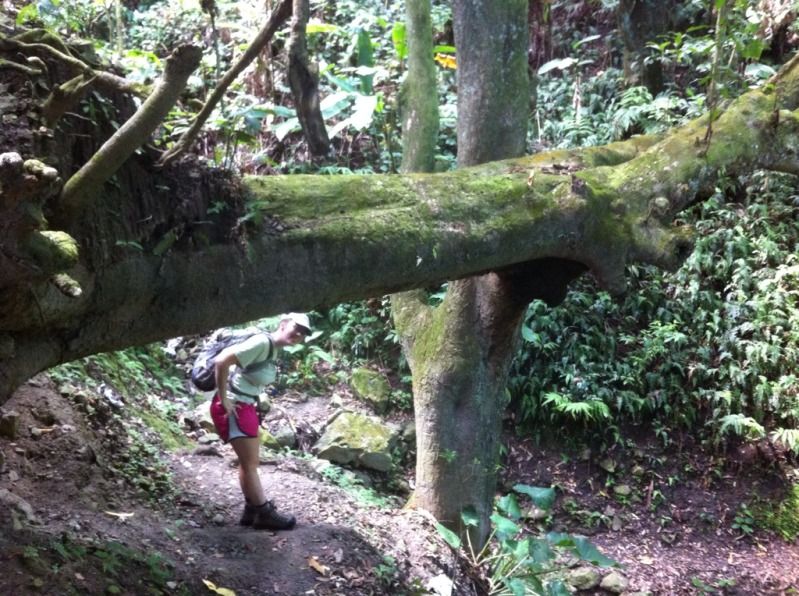
Sonja ducking under the two 'kissing' trees.
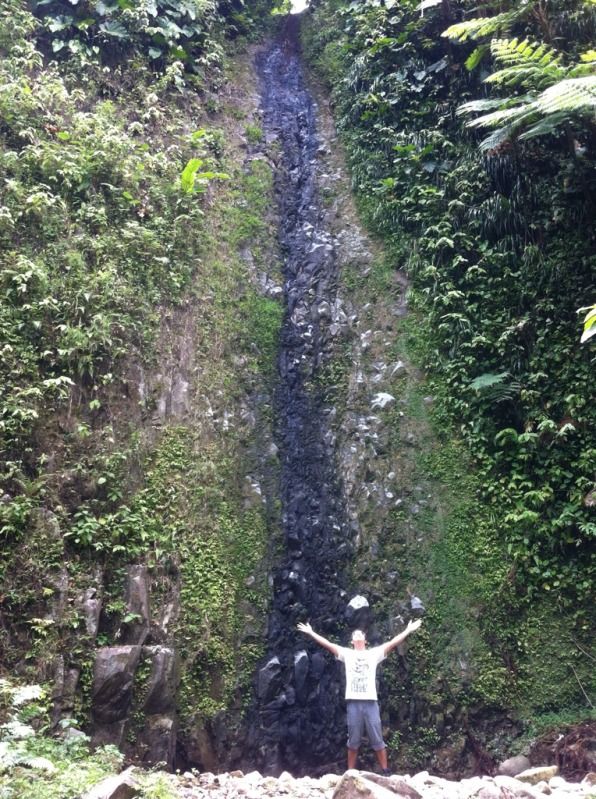
Arrival at the dry 100-ft waterfall.
This Friday, Em, Gerren & I are attempting to trek up Katy Hill, the tallest peak in the Centre Hills. Trés bien.


