Showing posts with label school. Show all posts

Thursday, July 12, 2012

Islands & Treks

Having now almost completed my stint here in Montserrat, I have been recently reading up more about the other British Overseas Territories and trying to get a feel of the infrastructure of music education in other OTs. My work here has been, if not inspiring for the students, then very much so for myself. And one of the long-term ideas that I've allowed to fester in my mind has been one that involves collaboration amongst music students in all the different OTs around the world.

Of course, I am certain the potential groundwork seems massive - but having lived in a small(ish) island community, leading and supporting music education schemes, I must admit it is very relentless but rewarding work. Montserrat is only but one of the 14 OTs around the world, ranging from large, populated islands like Bermuda and the Cayman Islands - both well known for tourism and the occasional tax evasion - to smaller, isolated islands such as the Falkland Islands and Pitcairn Islands.

At pop. 67 (2011 est.), Pitcairn is the least populous jurisdiction in the world. The main island is the only inhabited one, with three other small islands making up the group of Pitcairn Islands. With no airstrip and a nearly-perpetually tumultuous bay, the only access to the island is an overnight journey by sea from the other nearest landmass, Mangareva, French Polynesia - 300 miles away. The regular ship that services the island (bringing island stores and occasionally, tourists) makes only two return trips every three months.

There is only one school on the island (pre-school and primary), with what I guess appears to be between 5-7 pupils overseen by a qualified teacher appointed from New Zealand. Each teaching contract in Pitcairn lasts for two years, and other duties include editing the Pitcairn Miscellany, a monthly newsletter filled with island happenings, ship arrivals and local gossip.

And it's this newsletter that I have been rather absorbed with recently - it's like reading a local newspaper about a family living in a somewhat Swiss Family Robinson-esque fashion. Add that to Pitcairn's somewhat illustrious history - Pitcairners are mostly descendants of the Bounty mutineers and the Tahitians who accompanied them - and charming isolation, I have been quite fascinated with the inner workings of such a close-knit community. Which brings me back to the idea of possibly setting up some form of collaborative project with the students on Pitcairn, perhaps starting with my new students in my upcoming job at St John's next academic year.

For those who might be interested in a glimpse of a country populated by only (approx.) 67 people, sharing a newly-upgraded 1 Mbps satellite internet connection and living with 14-hour electricity cycle per day and only one privately-owned car on the island, you can read the latest copy of the Pitcairn Miscellany which I have uploaded here. Regular subscription costs US$15 per year. Pitcairn is now trying to expand tourism to the island, reaching out to the numerous cruise ships that sometimes call whilst traversing the Atlantic. However, access to the bay is extremely weather-dependant and it's never a guarantee that you will be able to set foot on the island after your lengthy journey.

Of course, if you think the work gossip in your office building was bad enough, think again. Pitcairn is also no stranger to controversy, having come into the spotlight for the 2004 sexual assault trials where charges were laid against seven men living on the island and six living abroad, including the island's mayor at that time. All but one of the defendants were found guilty, some with multiple counts of sexual attacks of children, and were housed in a converted prison set up by the British government. Particular consideration in sentencing had to be given due to the fact that if too many able-bodied men were incarcerated for too long, the island would essentially cease to function properly. Talk about a serious case of cabin fever.

The beguiling charm of Pitcairn still holds steadfast, however, and short of obtaining my own sailing yacht and traipse across the Atlantic, I shall content myself to the role of couch traveller and perhaps get to work on seeing that collaborative project through. Who knows, if this is successful, the next step could be Ascension Island (pop. 1,122) or Tristan da Cunha (pop. 264). Interestingly, Tristan da Cunha, while being the most isolated inhabited island in the world, already has an ongoing music collaborative project between the island's school and amateur composers in England, led by a certain music teacher named Tony Triggs.

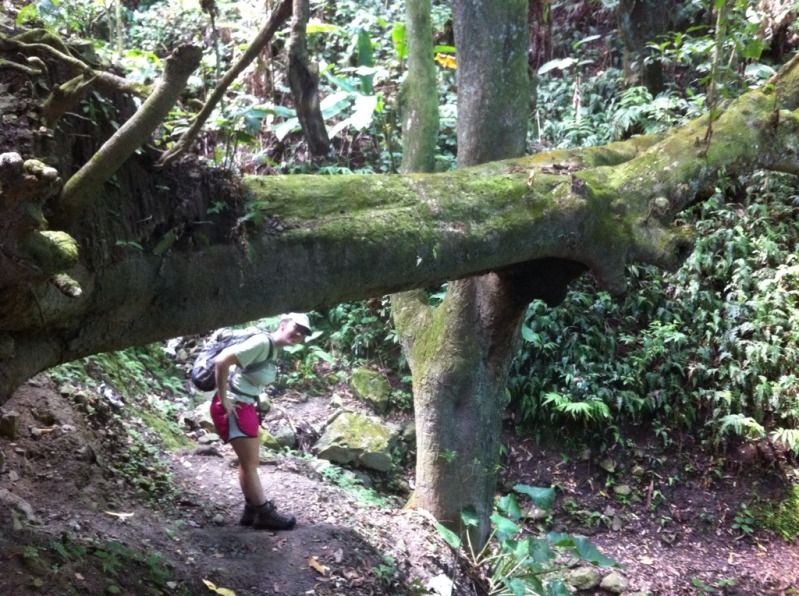
In other more local news, I have been doing a bit more trekking around Monty, doing some last-minute exploration of nature before I leave. Last Sunday, Sonja kindly agreed to take me on the trail to the dry waterfall, with Pepper tagging along. It was a mildly easy, 3-hour return trek which culminated with the dry waterfall looming over a the wide and rocky Soldier Ghaut - most impressive. A few photos from the morning.
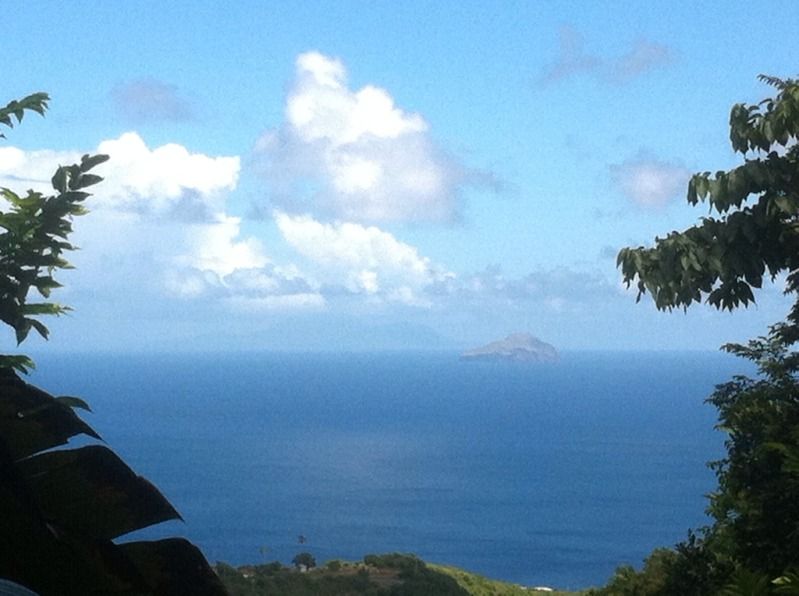
An exceptionally clear day: Redonda out at sea, with Nevis just faintly beyond.

Sonja ducking under the two 'kissing' trees.
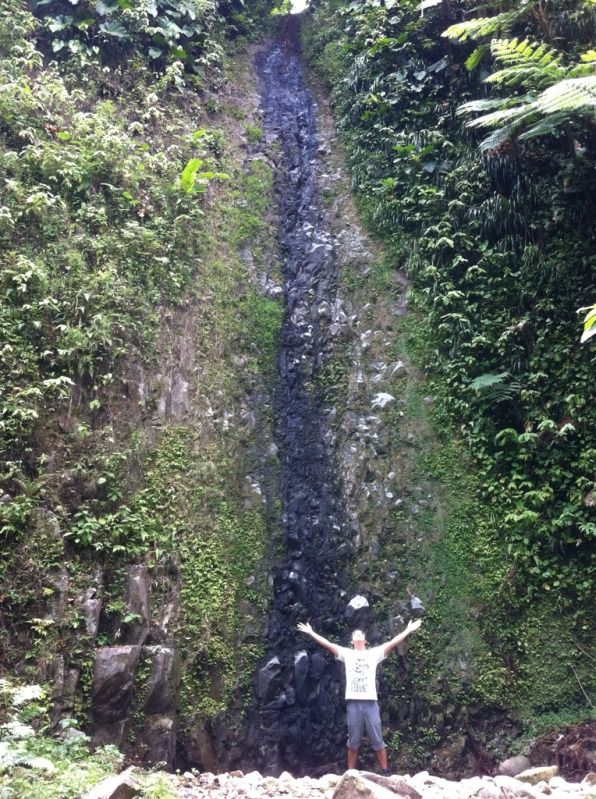
Arrival at the dry 100-ft waterfall.

This Friday, Em, Gerren & I are attempting to trek up Katy Hill, the tallest peak in the Centre Hills. Trés bien.

Monday, June 25, 2012

News & Weather


Two and a half weeks on from the jubilee recital, it is now getting coverage on local papers and newsletters. Click on the above image to enlarge the photo and to read the article.

And now I am back in Montserrat after a blazingly quick week in London - only once more will I have to transit through the chaotic mess that is Antigua's airport! I always breathe a sigh of slight relief when the FlyMontserrat plane lifts off from Antigua's tarmac, leaving behind the throngs of American tourists and Boeing 777 jets, making the intrepid 20-minute flight across azure waters before Montserrat looms into view. Peaceful, relaxed, tranquil and everything it's been made out to be - all visible from the sky.

But this is it now - slightly less than three weeks left of paradise isle before it's back to the big smoke. On some good news, however - the job interview back in London was a success and I will be accepting the offer to start in St John's Prep School in September.

Montserrat is at it's hottest I've ever experienced so far, and with no A/C in my house the fan has become my closest friend and companion. The weather now is significantly hotter than what I first remembered when I got here in January, and I'm slightly surprised by how varied the temperature can get given this island's close proximity to the equator.

Things have slightly taken a lull at school as well, with exam period now in full swing. The end of term is nigh!

Wednesday, June 13, 2012

Bonfire & Fireworks


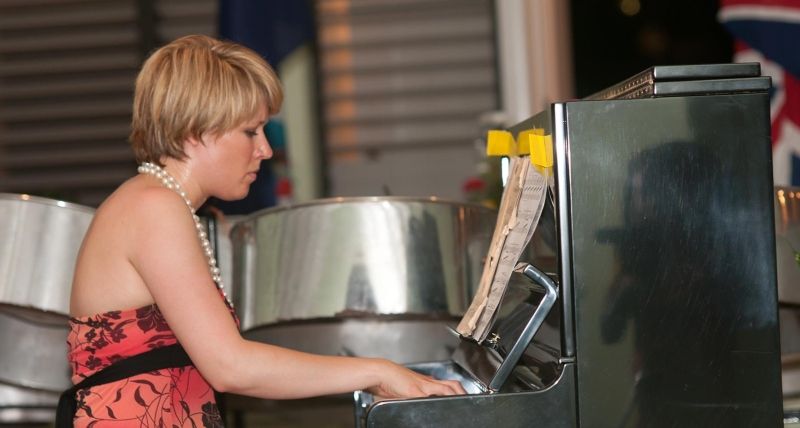
While In Montserrat has been a great success, and on that evening we managed to raise nearly EC$4,000 for our efforts to go to the Montserrat Foundation (UK). Guests were treated to an eclectic line-up of musicians and student performers, including Jo who did a brilliant first half of classical repertoire from Schumann and Prokofiev, amongst other works. Filipe did more than just visit Montserrat when he also took to the piano, and both of them were immensely well-received.

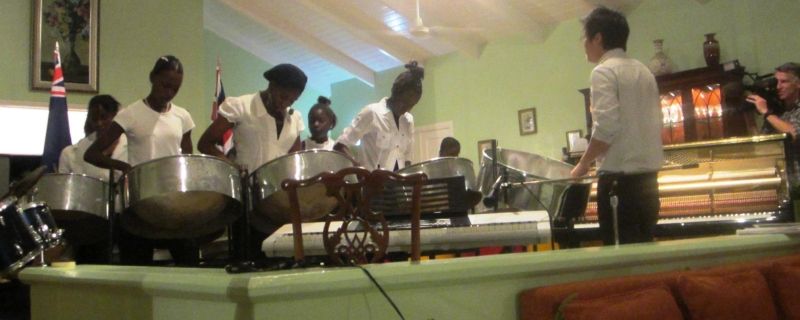
Filipe & I revisited our days in Guildhall when we also performed some four-handed works on two pianos, one of which was collaboratively composed during his stay here in Montserrat and the other completely improvised. The MSS steel pan did an amazing debut appearance, playing Buddy Tom and Hold My Hand, and the Montserrat Youth Choir shone as usual with a few amazing soloists standing out in particular.

I will be posting up for photos and videos up here once I get hold of them.

The past fortnight certainly has been particularly busy - apart from planning this recital, I had Filipe and Jo over from London to visit. And to perform as well, of course. But apart from all that, we also went about to take in the sights and sounds of Montserrat, including a bit of diving, venturing into the destroyed capital Plymouth, and catching the transit of Venus across the sun on the MVO helipad.

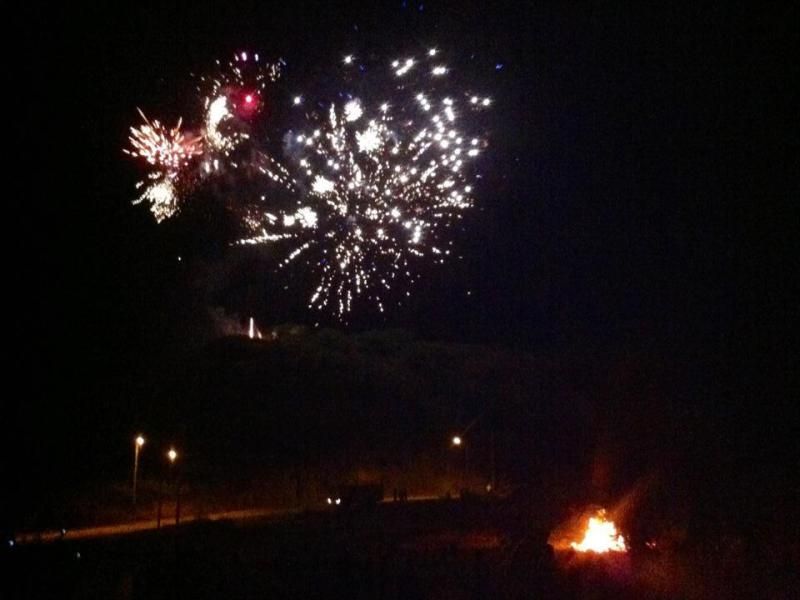
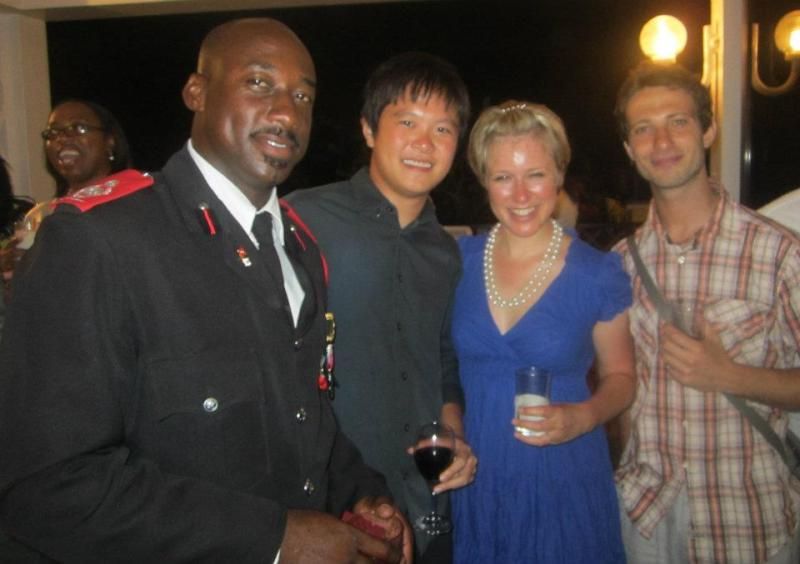
Being the week of the Queen's diamond jubilee celebrations, Montserrat as a British overseas territory certainly wasn't left out either. There were fireworks and a bonfire last week, a jubilee medal reception for the fire and police servicemen and women, and of course, the recital itself.

Fireworks & bonfire at Little Bay.

Sunset on the evening of the Venus transit.

Filipe & I heading off to dive at Rendezvous Bluff.

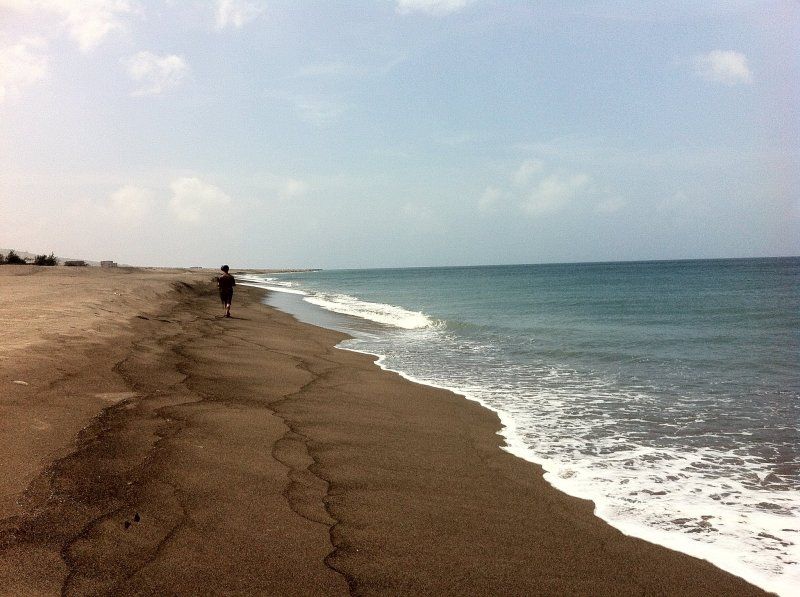
The extended beach at Plymouth.

Venturing into the destroyed capital.

At the jubilee medal reception.

And with barely any time for a breather, exam period at MSS quickly approaches. I, however, have managed to somehow squeeze in time to write all my exam papers, and now with that out of the way, I am certainly looking forward to a quick weekend sojourn in Antigua with Jo this Saturday.

Next week, I will be back in London for a job interview. If any prospective applicant for this project placement would like to have a chat with me then about the work being done here, please do get in touch.

Sunday, April 22, 2012

Instruments & Beyond

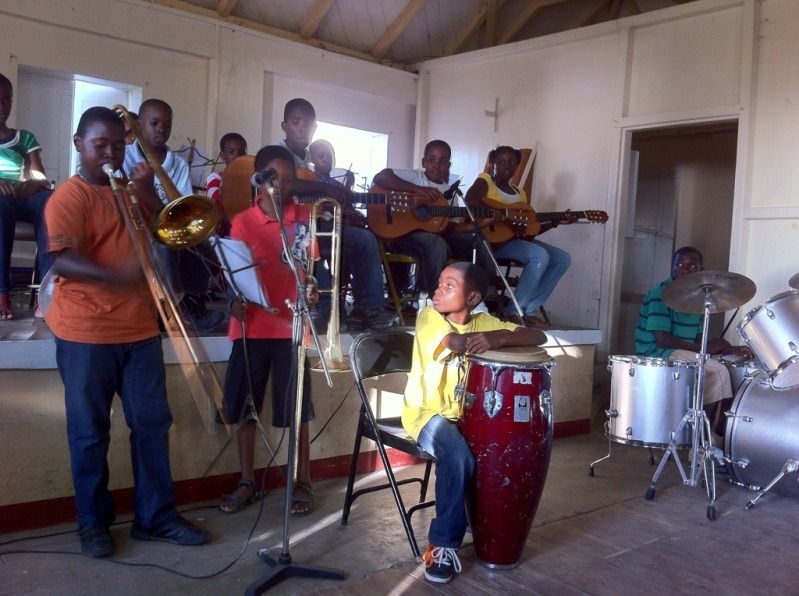
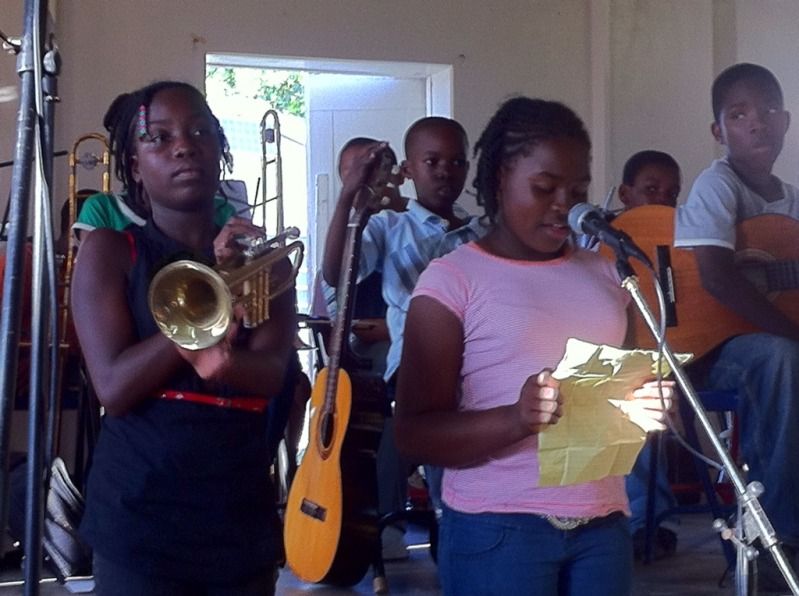
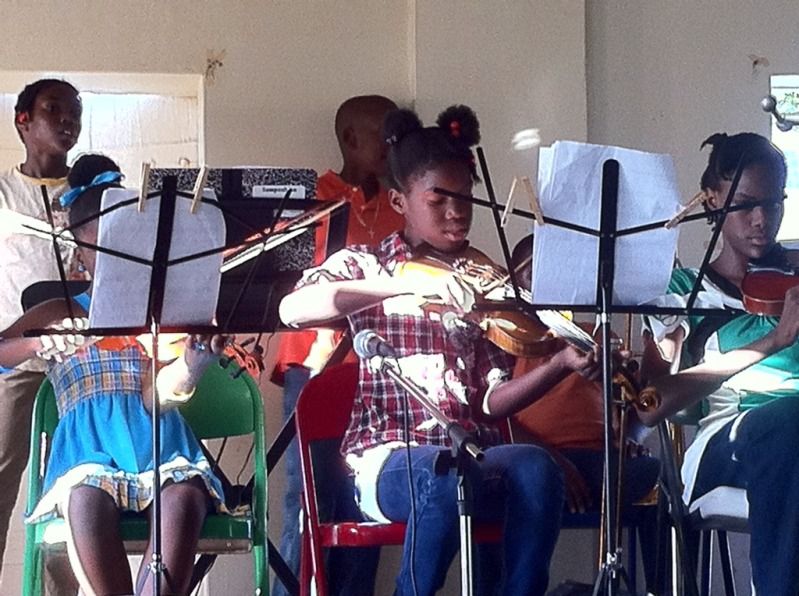
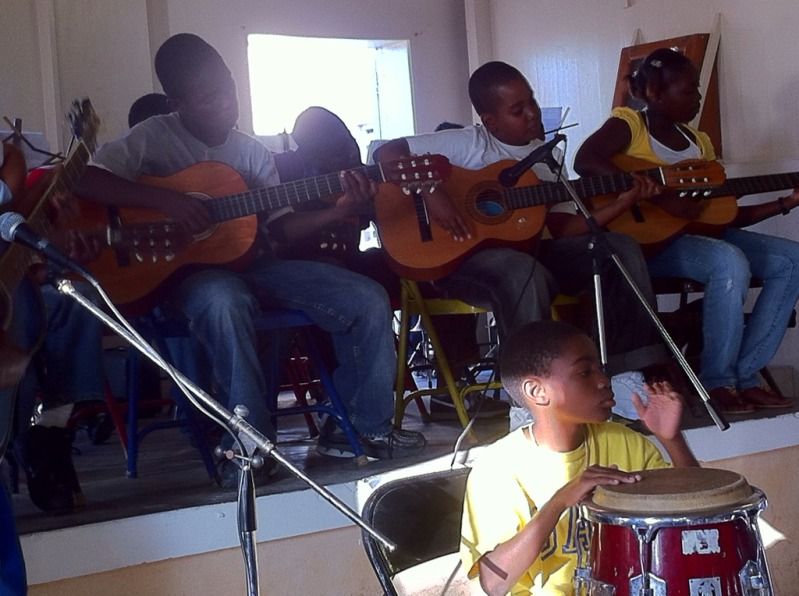
Over the last two weeks, Herman "Cupid" Francis, the Director of Culture, has been running his annual Easter music workshop where primary and secondary school students can get a chance to receive basic instrumental tuition, with hopes to spur them on to pick up music. Assisted by his brother Bimshaw, the both of them cover an impressive array of instrumental teaching ranging from guitar to violin to trombone to keyboards.

At the end of this two-week period, most of the participants got together and put on a presentation about what they have learnt over the course of the workshop, as well as perform some basic tunes on their selected instrument. At the end, they performed Amazing Grace as an entire ensemble.

Sounding out the trombone.

Introducing the inner workings of a trumpet.

The violins having a go.

The guitars performing their bit.

While I would have loved to part of this workshop, I couldn't do so because I was back in London for my Easter break. Cupid has been carrying out this programme for many years now, and most participants who signed up usually stay on and form part of Small Beginnings, a young persons orchestra that provides students the opportunity to play their instrument as part of an ensemble after school.

Perhaps it would be possible to re-look at the dates in future for the next education specialist coming to Montserrat to be able to be part of this continually ground-breaking effort, as the term dates for secondary school differs from primary.

Saturday, April 21, 2012

Concrete walls & Rosin

The first week of the summer term has passed quickly, with lots of lesson planning taken care of and many an hour spent in front of the photocopying machine. The past week has also been rather rainy and cool, which I hear has been a welcome break from the very hot weather Montserrat had been experiencing during the two weeks I was away. Ironically, London was still in the grips of some unseasonably cold weather when I was there.

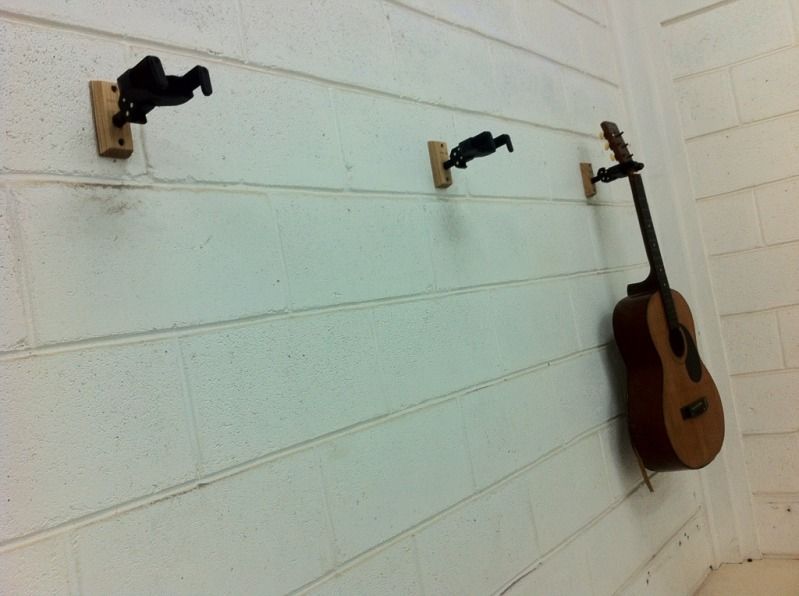
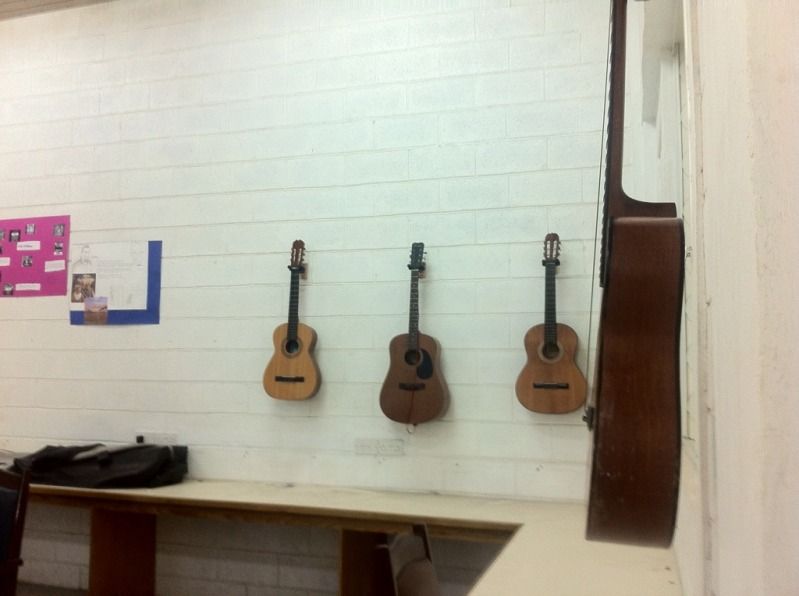
Being in London over the Easter break gave me the opportunity to procure lots more resources for the island. Piano and music theory books, and small things like rosin and valve oil - which, while you would ordinarily get any other music store back home, cannot be found here and must be specially ordered in. I also managed to get some wall guitar hangers which, apart from doing what it does, always look good when it comes to sprucing up the image of a music classroom!

I have to say though, the walls that make up buildings over here are strong enough to withstand a hurricane - no pun intended. My classroom walls were made up of extremely sturdy and tough concrete brick, and the accompanying drill bits which came with the borrowed drill barely put a dent in it. So I had to run to the hardware store and pick up a new set of drill bits, and after screwing in five guitar hangers (two screws each), I had broken one in half, chipped off another, and two more are now too blunt to do anything.

Maybe I need a proper lesson in drilling school.

Battling with the walls.

All set up and good to go.

Having had a term to set up the old Salem Primary as the new designated music education 'centre' for the island is paying off well - we now are slowly amassing a steady stream of instrumental donations which will be taken care of looked after. The primary school wider-ops music programme Small Beginnings will also now be run from the new location in Salem. I am still in need for more wall guitar hangers (I only had enough space for a maximum of five to bring over), as well as basic keyboard damper pedals.

And from the looks of it, another new set of drill bits.

The Xinjiang Folk Dance which we did last month was recorded again, this time at Government House with full costumes and in proper HD! After trying to attempt some slick, multi-camera angle video editing on the frustratingly basic Windows Live Movie Maker, here's the result!


Friday, February 17, 2012

Volcanoes & Work schemes


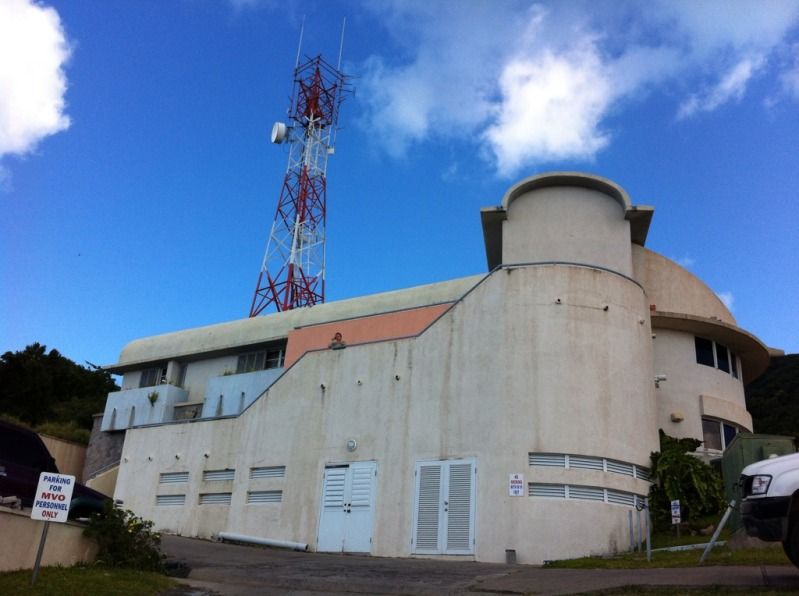
After six weeks on the island, I finally made a trip up to the Montserrat Volcano Observatory (MVO) to pay a visit. Having got to know quite a few scientists and staff who work at MVO, I thought it would be nice to spend my half term holiday up at MVO to see what actually goes on there. Half term here, by the way, is one day. Not one week. Gotta learn how to treasure it!

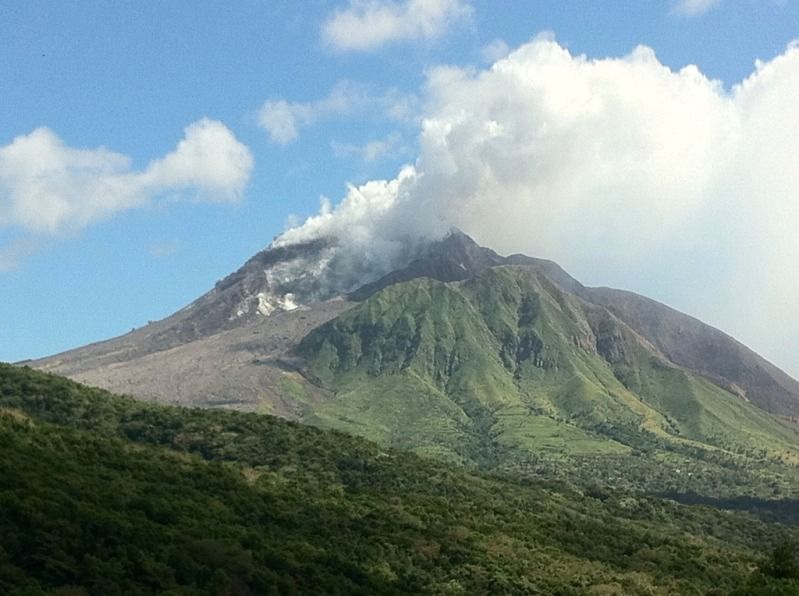
The MVO's main function, as you can imagine, is to closely monitor volcanic activity coming from the Soufriere Hills volcano, as well as issue travel advisories for the exclusion zone. Although pyroclastic activity has more or less ceased today and eruption continues on a much reduced scale (such as a few rockfalls, etc.), Soufriere Hills has in the past caught Montserrat and its residents by surprise on a number of occasions - with the most severe impact being, of course, the eruption on 25 June 1997 which resulted in the deaths of nineteen people.

Since its eruption began, the volcano has become one of the most closely monitored volcanoes in the world. The MVO takes detailed measurements and reports on its activity to the government and people of Montserrat. A typical MVO visit consists of a self-guided tour and activities include poster displays detailing information about past volcanic activity, a short documentary film and displays of rocks, ash and other artefacts. And of course, stunning views of Soufriere Hills

On approach to the MVO.

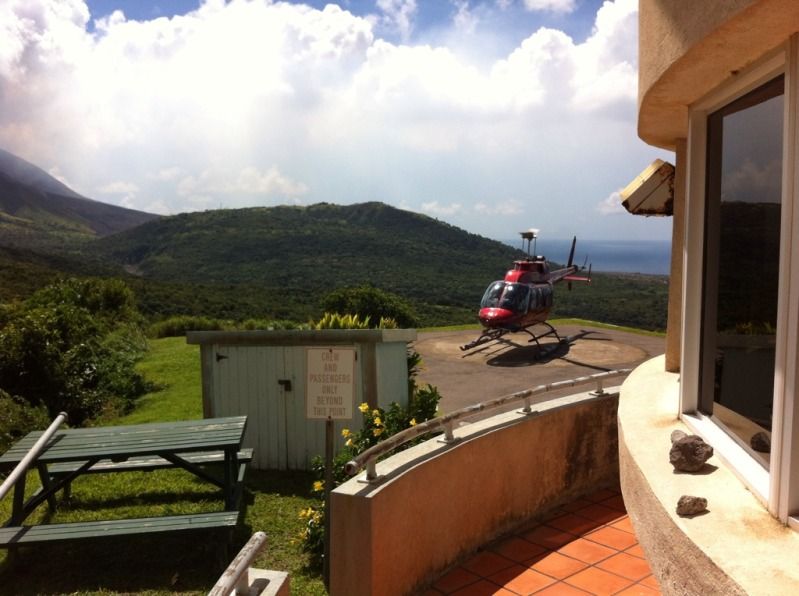
Every Friday is helicopter day.

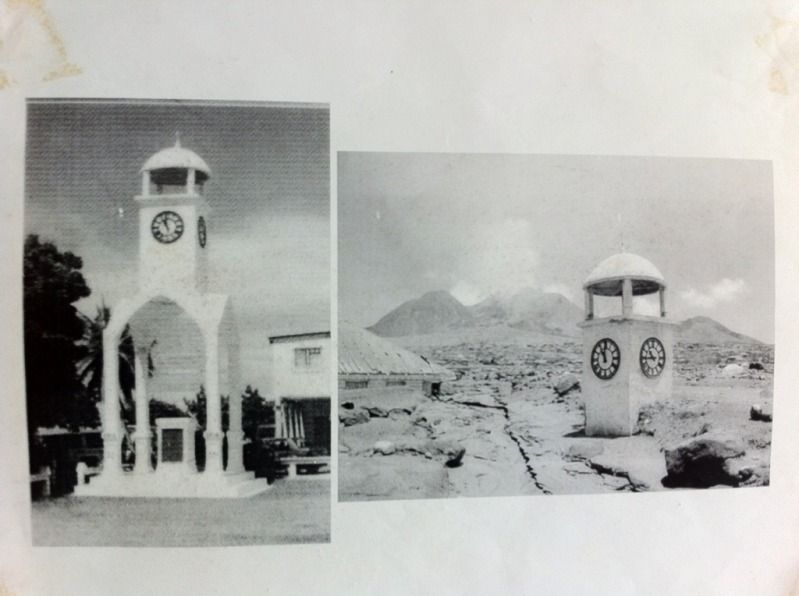
A stark example of how pyroclastic flow destroyed Plymouth.

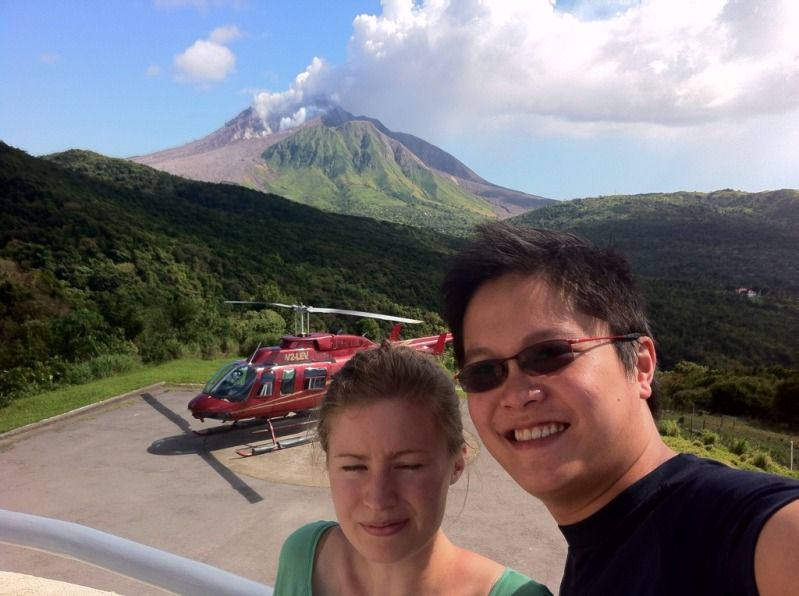
A relatively clear day for volcano admiring.

With Mel, one of the MVO volunteers.

The documentary film was very informative, and showed impressive scenes of Soufriere Hills at its peak in activity - it's hard to imagine how this calm, beautiful scene today can in fact be so immensely beguiling. Compare this to when it was erupting back in 1995 with these pictures here and here.

This past week has gone by relatively quick - with no teaching on Wednesday and Friday due to Parents' Day and half term respectively. I met quite a number of parents on Wednesday, and so far all the feedback has been really positive and encouraging. In actual fact, I realize that the focus what I came here to do initially has shifted quite a bit. Prior to starting work here, I thought I would be running a more after-school based music programme and service. However, the focus has now changed to establishing a music curriculum for Montserrat Secondary School, and implementing a work scheme to be delivered in classrooms.

A lot of this sounds very education- and teacher-based, and it has been indeed. At the moment I am planning and delivering lesson plans for Years 7-9, spread out to a total of 10 different classes. Compared to a normal teaching timetable back home, this is definitely more than a normal full teaching timetable. Combine that with after-school activities such as choir and peripatetic teaching, this translates to a lot of hours spent solely with MSS.

However, given the current state of music education and outreach on the island, it would be hard to establish a 'wider ops'-styled programme when the nucleus of formal music education in schools is yet to be properly established. I have decided that my main aim, for MSS at least, is to sustain a keen level of interest amongst students so that they continuing taking music as a subject option and, finally, take music as an O-level subject in their CXC examinations in Year 11.

This will require a constant occupancy of the role of music specialist in MSS, and I hope this is something that the Foundation is willing to support in the years to come. Having being trained in music education and outreach, as well as workshop skills, has nonetheless helped me immensely in delivering a music curriculum in the classroom - combing different teaching methods and approaches seems to have spurred continual interest amongst students, even though the topics covered could be as basic as music notation.

The current plan is to widen the music subject to Years 10 & 11 as well, however I think this will require at least two full time music specialists within MSS - just like any other regular school in the UK. I think there is a very fine line between 'music teacher' and 'wider-ops workshop leader' here, although I have found both roles to be quite interchangeable most of the time.

In other community-based project news, rehearsals for Volpanics is now in full swing and I'm now in the midst of doing up an arrangement for Big Spender on pan orchestra - which I'm quite excited about. I am also drawing up a proposal to conduct CPD weekends for professional musicians, music educators and music practitioners in Montserrat. Truth be told, setting up new projects can be quite a lengthy affair - ministry officials seem to have quite a pre-defined mindset about how music education, activities and programmes should be conducted, and any new projects always seem to be met with quite a lot of initial apprehension.

I shall now leave you with other scenes I've recently encountered over here - and since a royal visit is approaching, here's an apt photo of Prince of Wales & Duchess of Cornwall's guestbook entry in Government House, the official residence of the governor of Montserrat.

Charles and Camilla leave their mark.

Sunset at Little Bay on Valentine's Day

Tomorrow marks the fifth round of Montserrat Idol - things certainly are heating up! Should you find yourself curious about the ongoings, you can watch scenes on PTVMontserratIdol.com and catch the live stream every Saturday at 1am UTC.

Wednesday, February 8, 2012

Canines & Sunsets

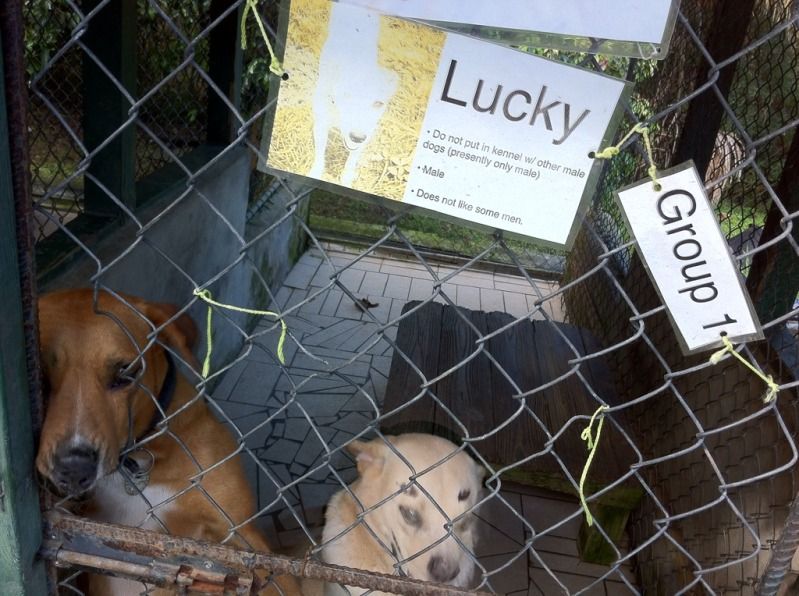
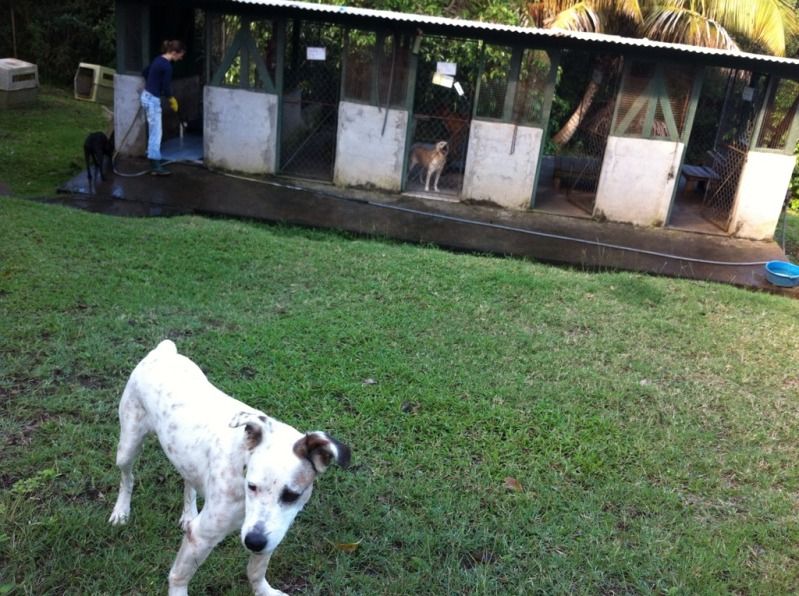
This morning I found myself at the Montserrat Animal Protection Society (MAPS), along with Emily who took me along to one of her regular volunteering duties. MAPS does an admirable job looking after neglected and abused animals on the island, providing them shelter, food and attention until they can be fostered out. It is entirely staffed by volunteers who operate wholly on the goodwill of donors and sponsors.

I have been looking to adopt a dog myself, and hence Emily suggested I head down to the MAPS shelter to get to know the dogs better before making a decision. We had a brilliant morning and I found myself growing quite fond of an active canine named Jack.

The MAPS canine shelter.

Greeting the new visitor.

Em hosing down the kennels while the dogs enjoy a run.

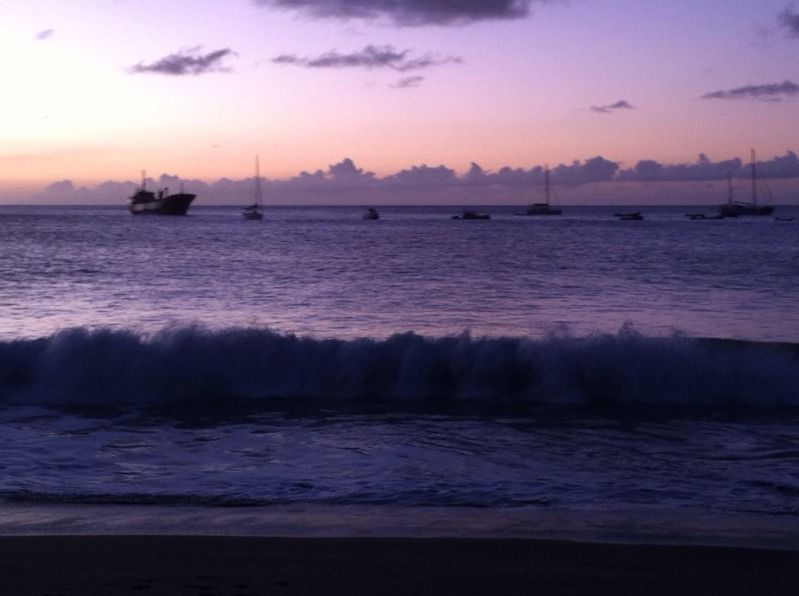
The weather recently has been rather chilly - now those of you reading from Europe (how's the snow?) might think me mad, but Montserrat does experience 'winter' too. The coldest months are from December to February; with an average daily temperature of about 24 deg C, this is a few slight notches below summer temperatures which soar up to about 33 deg C. There have been plenty of gales lately, but also quite a few stunning sunsets.

View of the sunset from my apartment.

In other music-related news, rehearsals for the Montserrat Secondary School choir have started, and I have started a peripatetic teaching programme for students wanting to learn the piano. Currently I am running it single-handedly, but I will be starting to find out if anyone on the island might be willing to give instrumental lessons to students after school as well. I will be working on more contemporary songs with the choir - I don't think the young ones will quite enjoy singing about Irish immigrants getting off at Ellis Island to carve out a future in the New World!

Saturday, January 28, 2012

Balinese kotekan & Scottish reels

And in the blink of an eye, two weeks have passed since my last blog update. Teaching has gone into full swing now, and the response so far from students has been encouragingly positive. I have been planning the work scheme for music to be taught as a subject to the Years 7 to 9 in Montserrat Secondary School, in conjunction with the Ministry of Education. If my objective is to expose students here to as varied styles and genres of music as possible (as was originally the idea), then delivering music education through the classroom has certainly achieved that.

The approach here that I have taken has differed quite greatly from the UK - students here have no formal music education in schools, and don't receive regular instrumental lessons, if any at all. This is unlike back home, where you could hold a creative music workshop made up of any type of student participants, and almost all of them would certainly have had music taught to them in the classroom and have had weekly instrumental tuition. This, of course, makes it easy to explain what the concept of kotekan found in Balinese gamelan is all about and attempt to recreate elements of that on their instruments. Over here, however, I've had to start from the very basics of pulse, rhythm, note values and notation before asking them to identify the time signature of a Scottish reel (which went down quite well), for example. And this could have, in my opinion, been only effectively delivered in a classroom setting.

The Year 9s have been having a go at film music, looking into different styles of today's Hollywood composers, differentiating between elements of film music such as motifs, underscoring and scene music, as well as coming up with storyboards of their own before acting scenes out while accompanying them on instruments, live. Given how there is no cinema located on Montserrat (the only one was previously destroyed by the volcano), I was slightly apprehensive about the relevance of this module. But I had nothing to worry, as I later found out that given the prevalence of broadband internet on the island, a lot of my students regular watch films through downloading or streaming (as one does?) them online. Ironically, I get power outages here about twice a week - but the wifi in my house never fails me. This reminds me of the time last summer when I was in Romania leading students to volunteer on a summer school programme at an orphanage in a village somewhere in the middle of Romania - and the village had blazing fast broadband internet, but no running water.

I have made slight progress on the instrumental front. I have managed to unearth approximately 50 recorders from the Ministry of Culture, as well as get another adaptor for the keyboards - that makes it two now. And, adding on to the Virtuoso piano app on my iPad and iPhone, as well as the piano app on my TA's Kindle Fire (bless her - she downloaded a piano app for her tablet to help me out with the 'shortage'), that makes five accessible 'keyboards' in the classroom.

Sir George Martin has just ended his month-long sojourn in Montserrat, which he and Lady Judy embark on every year. They own a property here called Olveston House - a beautiful house that, when not occupied by the Martins in January, is used as a guest house which has hosted the likes of Sting, Eric Clapton and Paul McCartney during their expeditions here to record at AIR Studios.

George & I in Olveston House on the eve of his departure.

On a slightly different note, Montserrat Idol has commenced - yes, even this island has not escaped the television sensation scheme first concocted up by Mr Simon Cowell himself. However, given that there is no television broadcasting station in Montserrat, the only way to watch the competition is to, well, go watch it live yourself. It's held every Saturday evening at this cosy beach bar in Little Bay called Soca Cabana, and the competition is now in it's second year (if I remember correctly). The first prize? Round-trip airfare to Antigua, two-night stay at the Catamaran Hotel in Antigua's Falmouth Harbour, a Blackberry Torch and automatic placement in the finals of the Antigua Idol contest (they have it there too!) for this year.

Also, as inevitable as the sun rises and sets everyday, I have embarked on some steel drums playing myself, having joined a steelpan ensemble on the island called Volpanics (loving the pun here). I've assigned myself to tenor pans duty, only because my limited coordination skills can only allow me to focus when are the notes are one pan instead of being spread out over two or three pans. That, and I just love playing the melody anyway! Will update my progress on here as I, hopefully, improve.

Tuesday, January 10, 2012

Lift-off & Whip-cracking

Yesterday saw my first day starting in Montserrat Secondary School, and it certainly was a marked difference to my previous school. Having only one secondary school on the entire island, there is definitely an immense variation of students - the raucous, the studious, the quiet, the uninitiated. Proponents of the meritocracy system will like to know that schools here divide their sets solely according to learning ability, with each form divided into three or four sets, one of which will be comprised solely of students who need learning support.

All music activities and lessons will be held off-site, a former primary school extension located a 10-minute walk away from the main campus. I don't know if that will turn out to be a blessing or not, as being removed away from campus might increase a sense of 'break-away' from the main curriculum in students, or that might mean that they might not just come to class at all! I have been told that there are organizing shuttle buses to ferry students back and forth from the main campus; that should work.

I was given the chance to observe a chemistry lesson during Period 1 yesterday, but throughout the lesson I heard another group of students having a laugh outside along the corridor. Guess their teacher wasn't around? Having spoke to Jo about this yesterday, she replied with some form of cool indifference, highlighting the time she spent in the state school system.

After discussions with the directors of Culture and Education, my job description has begun to slowly take shape. I will be delivering structured classes during curriculum time to Forms 1 to 3, that's Years 7 to 9. Schools in the Caribbean use a syllabus by the Caribbean Examinations Council, simply called the CXC programme. However, at present, only Forms 4 and 5 follow the CXC syllabus (of which music isn't offered as a subject by the school), while Forms 1 to 3 don't follow a structured syllabus at all. So that translates to lots of lesson planning. For community-based work, I will be starting off with working with New Beginnings - an ensemble that is comprised of primary and secondary schools across the island. Run by the Minister of Culture, Herman "Cupid" Francis, this music outreach programme has been in place for a little over ten years. I will also start running extra-curricular activities after lessons, first in the secondary school then stretching out to primary schools.

I'll be trying to garner interest for choirs and ensembles by using the good 'ol posters around the school method. Let's see how that goes. I think a bit of whip-cracking may be in order to get things moving along...