Showing posts with label music. Show all posts

Thursday, July 12, 2012

Islands & Treks

Having now almost completed my stint here in Montserrat, I have been recently reading up more about the other British Overseas Territories and trying to get a feel of the infrastructure of music education in other OTs. My work here has been, if not inspiring for the students, then very much so for myself. And one of the long-term ideas that I've allowed to fester in my mind has been one that involves collaboration amongst music students in all the different OTs around the world.

Of course, I am certain the potential groundwork seems massive - but having lived in a small(ish) island community, leading and supporting music education schemes, I must admit it is very relentless but rewarding work. Montserrat is only but one of the 14 OTs around the world, ranging from large, populated islands like Bermuda and the Cayman Islands - both well known for tourism and the occasional tax evasion - to smaller, isolated islands such as the Falkland Islands and Pitcairn Islands.

At pop. 67 (2011 est.), Pitcairn is the least populous jurisdiction in the world. The main island is the only inhabited one, with three other small islands making up the group of Pitcairn Islands. With no airstrip and a nearly-perpetually tumultuous bay, the only access to the island is an overnight journey by sea from the other nearest landmass, Mangareva, French Polynesia - 300 miles away. The regular ship that services the island (bringing island stores and occasionally, tourists) makes only two return trips every three months.

There is only one school on the island (pre-school and primary), with what I guess appears to be between 5-7 pupils overseen by a qualified teacher appointed from New Zealand. Each teaching contract in Pitcairn lasts for two years, and other duties include editing the Pitcairn Miscellany, a monthly newsletter filled with island happenings, ship arrivals and local gossip.

And it's this newsletter that I have been rather absorbed with recently - it's like reading a local newspaper about a family living in a somewhat Swiss Family Robinson-esque fashion. Add that to Pitcairn's somewhat illustrious history - Pitcairners are mostly descendants of the Bounty mutineers and the Tahitians who accompanied them - and charming isolation, I have been quite fascinated with the inner workings of such a close-knit community. Which brings me back to the idea of possibly setting up some form of collaborative project with the students on Pitcairn, perhaps starting with my new students in my upcoming job at St John's next academic year.

For those who might be interested in a glimpse of a country populated by only (approx.) 67 people, sharing a newly-upgraded 1 Mbps satellite internet connection and living with 14-hour electricity cycle per day and only one privately-owned car on the island, you can read the latest copy of the Pitcairn Miscellany which I have uploaded here. Regular subscription costs US$15 per year. Pitcairn is now trying to expand tourism to the island, reaching out to the numerous cruise ships that sometimes call whilst traversing the Atlantic. However, access to the bay is extremely weather-dependant and it's never a guarantee that you will be able to set foot on the island after your lengthy journey.

Of course, if you think the work gossip in your office building was bad enough, think again. Pitcairn is also no stranger to controversy, having come into the spotlight for the 2004 sexual assault trials where charges were laid against seven men living on the island and six living abroad, including the island's mayor at that time. All but one of the defendants were found guilty, some with multiple counts of sexual attacks of children, and were housed in a converted prison set up by the British government. Particular consideration in sentencing had to be given due to the fact that if too many able-bodied men were incarcerated for too long, the island would essentially cease to function properly. Talk about a serious case of cabin fever.

The beguiling charm of Pitcairn still holds steadfast, however, and short of obtaining my own sailing yacht and traipse across the Atlantic, I shall content myself to the role of couch traveller and perhaps get to work on seeing that collaborative project through. Who knows, if this is successful, the next step could be Ascension Island (pop. 1,122) or Tristan da Cunha (pop. 264). Interestingly, Tristan da Cunha, while being the most isolated inhabited island in the world, already has an ongoing music collaborative project between the island's school and amateur composers in England, led by a certain music teacher named Tony Triggs.

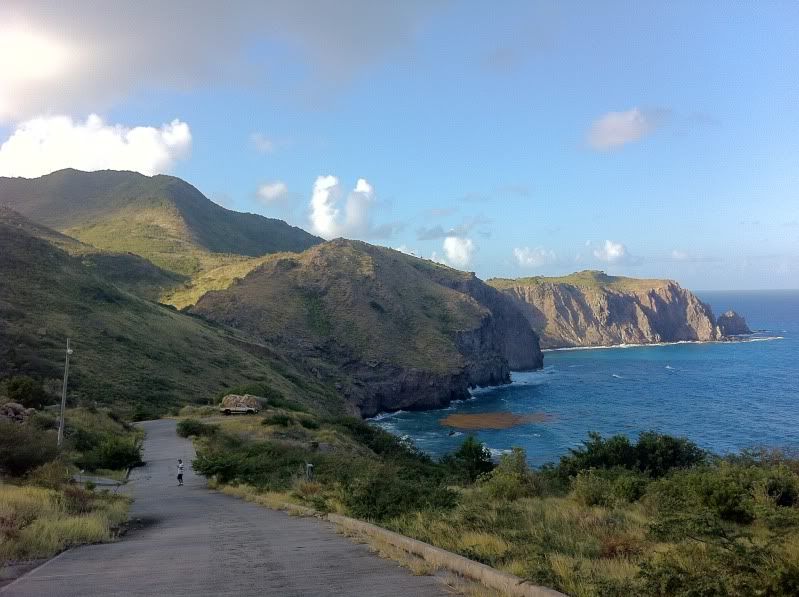
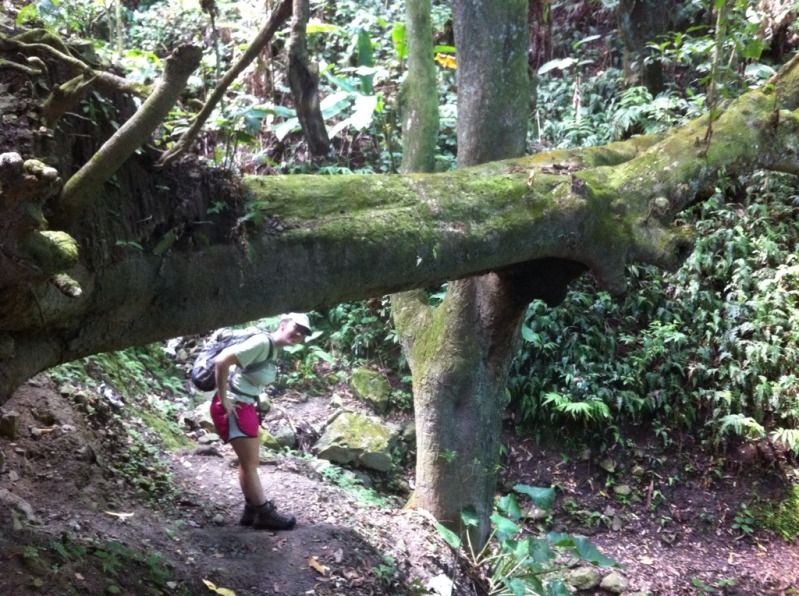
In other more local news, I have been doing a bit more trekking around Monty, doing some last-minute exploration of nature before I leave. Last Sunday, Sonja kindly agreed to take me on the trail to the dry waterfall, with Pepper tagging along. It was a mildly easy, 3-hour return trek which culminated with the dry waterfall looming over a the wide and rocky Soldier Ghaut - most impressive. A few photos from the morning.
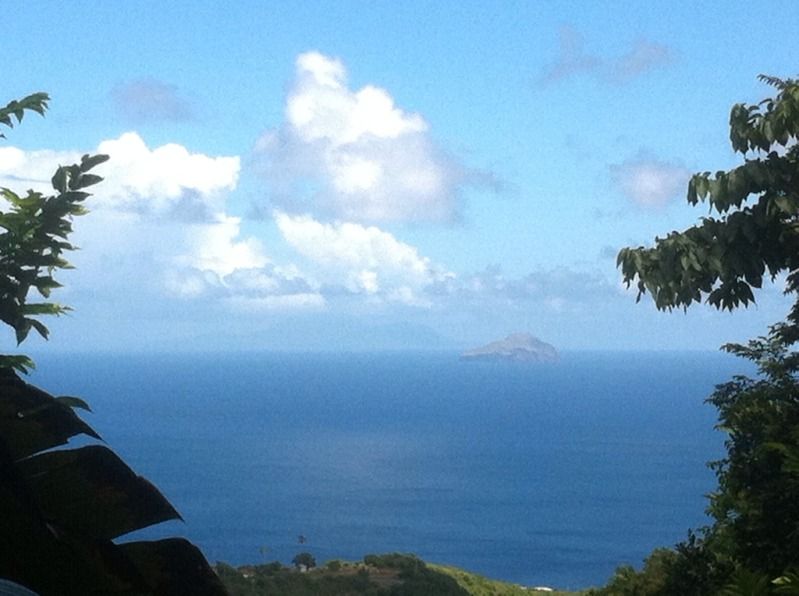
An exceptionally clear day: Redonda out at sea, with Nevis just faintly beyond.

Sonja ducking under the two 'kissing' trees.
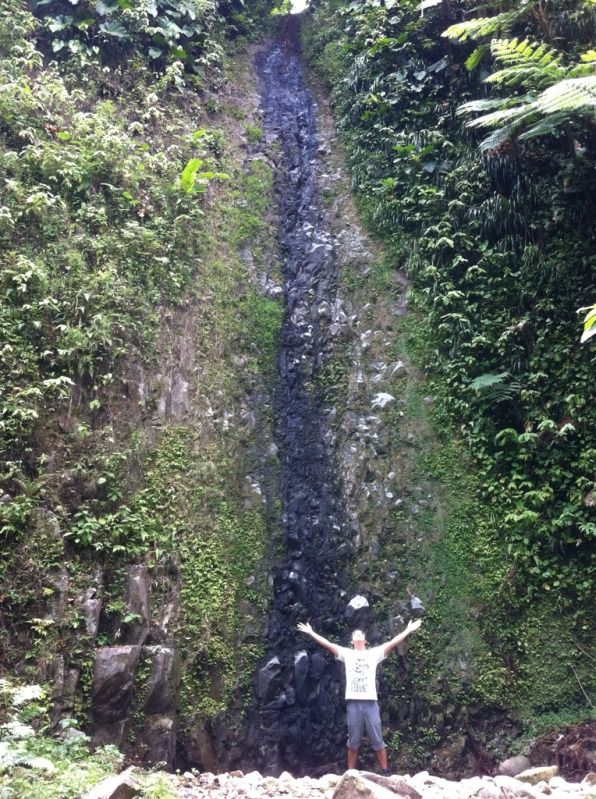
Arrival at the dry 100-ft waterfall.

This Friday, Em, Gerren & I are attempting to trek up Katy Hill, the tallest peak in the Centre Hills. Trés bien.

Friday, June 29, 2012

Write-ups & Recollections

About a month and a half ago I was invited to write down my experiences on Montserrat for the Guildhall School's student and alumni magazine, in order to give prospective applicants a brief introduction to life here. Now that it's been published, I'm reproducing it on the blog here.

Black sand beaches, goat racing and a volcano in the backyard, occasionally shrouded in mystic cloud cover. It’s no wonder Sir George Martin was enthralled by this place when he first visited in the seventies, enough so that he would then go on to set up AIR Studios Montserrat in 1979. And before the studio’s tragic demise during Hurricane Hugo in 1989, Montserrat was graced by a stellar line-up of artistes such as Sting, Elton John, Paul McCartney and Phil Collins, all of whom enjoyed recording in this paradise isle whilst enjoying a relative level of anonymity which could not be found in the big cities.
Then awoke the Soufrière Hills volcano in 1995 – this previously-dormant volcano suddenly erupted for the first time in the nineteenth century and changed the landscape of this small island permanently. With Soufrière Hills still active today, it’s hard to not mention the words ‘Montserrat’ and ‘volcano’ in the same conversation. 
Today, the Montserrat that I live and work in is vastly different from when the former capital Plymouth was still standing. Now, with more than half of the island in the exclusion zone, the population has declined from 10,500 to 4,800. While the islanders are ever so friendly with a resilient smile, they too feel the after-effects of this massive brain drain that happened along with the mass evacuations. Industries such as engineering, medicine, environmentalism and education have suffered, with little or no specialists in their respective field on the island. 
Still, Montserrat exudes a numinous sort of charm, which was first evident when I was flying in from Antigua on a seven-seater Britten-Norman Islander. Montserrat loomed in the distance, in a fashion that would not be out of place in a certain television series featuring a mysterious tropical island. The reason that took me across the Atlantic was because I responded to a call – Sir George and Lady Judy Martin were looking to send a music specialist to Montserrat to, in simplest terms, inspire young people to take on music. And I went. 
With a job description as vague as that, I was wielding a double-edged sword – I could plan and execute countless possibilities of music education programmes, but at the same time not knowing what support I would receive and what response I would get. Thankfully, being given tabula rasa in this sense allowed me to bite the bullet and start where I was most needed – in the secondary school. 
Montserrat has only one secondary school, with no formal scheme of music education in place before I arrived. And within 48 hours of boots touching the ground, I was tasked with planning and delivering the national music curriculum in the secondary school, running after-school music activities as well as wider-ops styled workshops for students and CPD sessions for professional musicians. 
Demand for instrumental teaching continues to grow, and lots of opportunities have opened up for expansion of music education on the island. I continue to set-up and support different music ensembles on the island that deal with young people, as well as raise awareness and highlight the necessity of music education within the school system. 
Montserrat certainly has a definitive legacy in recording industry, and while most of it has been lost with the eruption of the volcano, the community is working hard to restore it to its former glory. Projects such as the one I’m working on serve to build on that, giving the young people living here not only an avenue to explore their own musicality, but to take what they discover with them far and wide into the future. 
Currently, this project is sponsored and supported mainly by The Montserrat Foundation (UK), of which Sir George and Lady Judy Martin and both foundation trustees. It is also assisted by the Government of Montserrat, and the Rotary Club of Montserrat. I have been fortunate to be able to raise more funds to procure more music resources for the island, all of which are much-needed. Piano books, hand percussion instruments, and small things like rosin and valve oil - which, while you would ordinarily get any other music store back home, cannot be found here and must be specially ordered in. 
A lot of expats who have lived here for awhile will say Montserrat is amazing to visit, but sometimes a challenge to live in. Whilst avoiding the pitfall of calculative weighing of the pros and cons of such a situation, I must add that having a purpose whilst living here does make it more enjoyable, and in this case it has certainly proven to be a worthwhile effort. In one month you could be playing your first ever public steel pan gig, dance behind a truck loaded with massive speakers moving at half a mile an hour (this is called a jump up!), join in onstage with a Caribbean string band, or bet on your favourite caprid at the next goat race.


Sunday, April 22, 2012

Instruments & Beyond

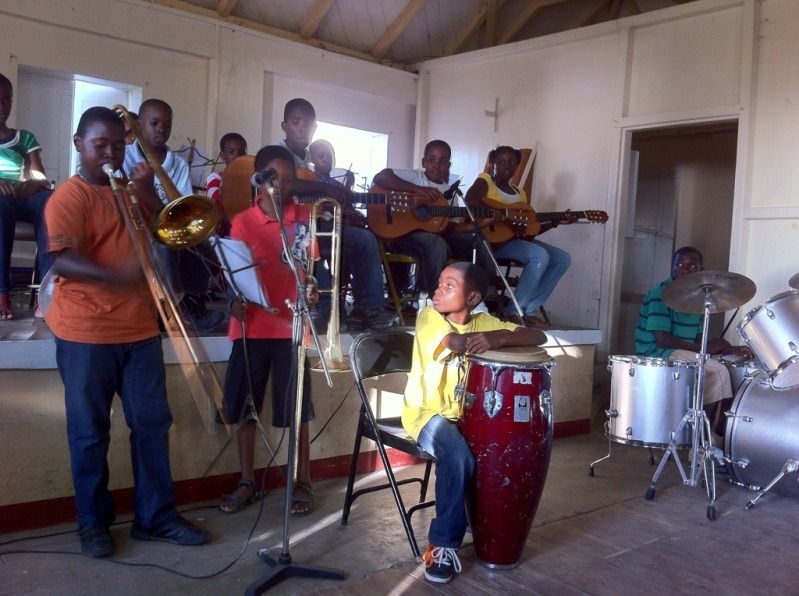
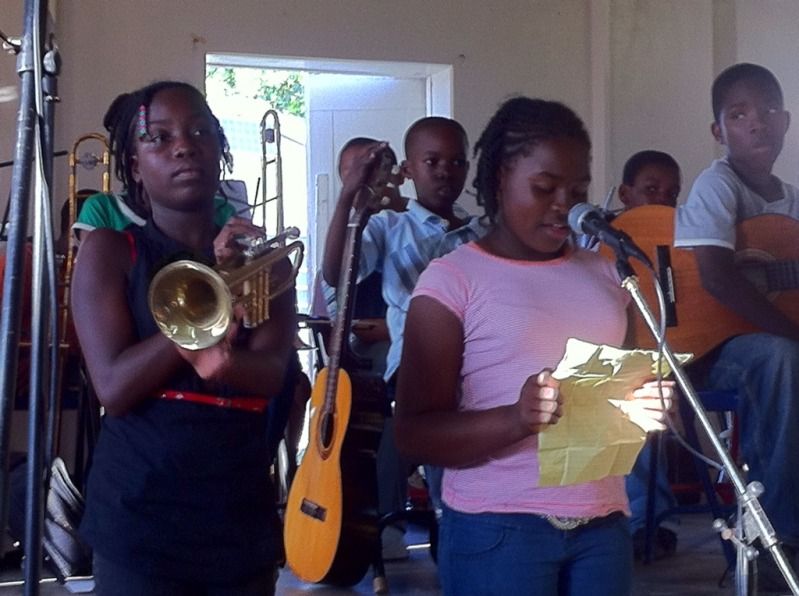
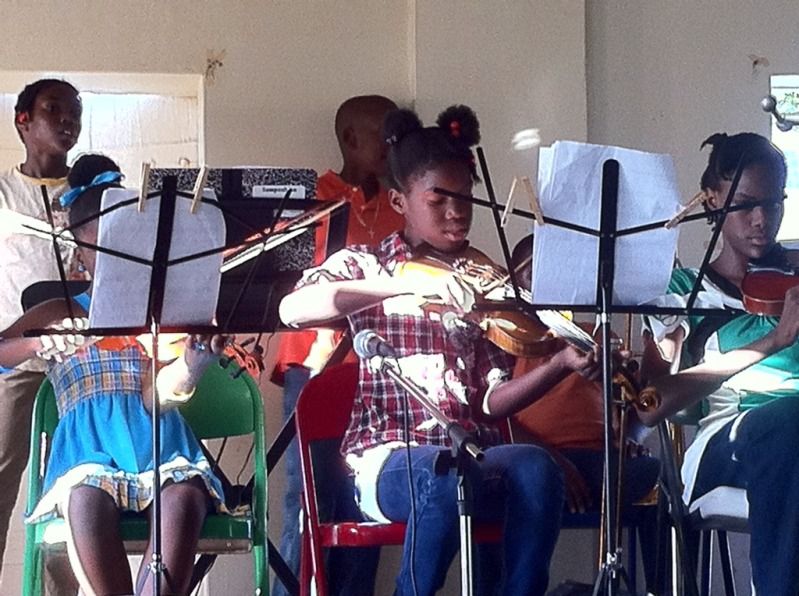
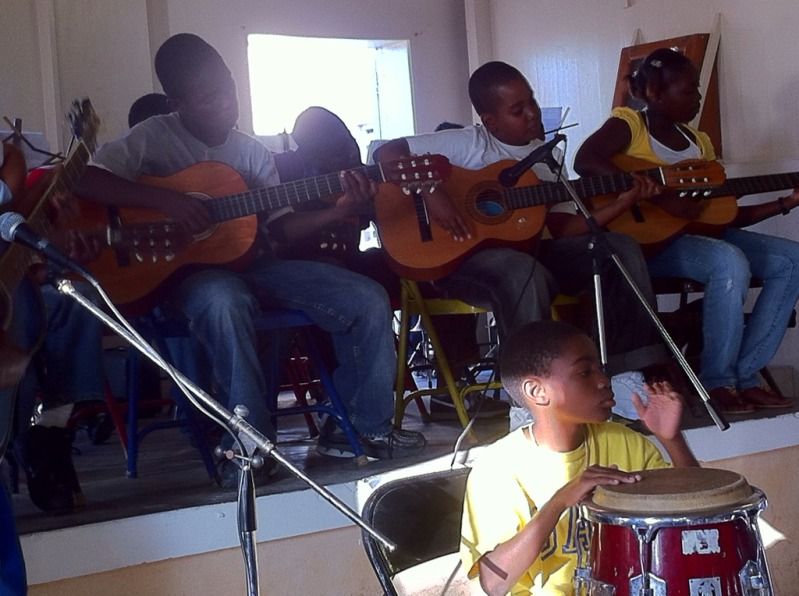
Over the last two weeks, Herman "Cupid" Francis, the Director of Culture, has been running his annual Easter music workshop where primary and secondary school students can get a chance to receive basic instrumental tuition, with hopes to spur them on to pick up music. Assisted by his brother Bimshaw, the both of them cover an impressive array of instrumental teaching ranging from guitar to violin to trombone to keyboards.

At the end of this two-week period, most of the participants got together and put on a presentation about what they have learnt over the course of the workshop, as well as perform some basic tunes on their selected instrument. At the end, they performed Amazing Grace as an entire ensemble.

Sounding out the trombone.

Introducing the inner workings of a trumpet.

The violins having a go.

The guitars performing their bit.

While I would have loved to part of this workshop, I couldn't do so because I was back in London for my Easter break. Cupid has been carrying out this programme for many years now, and most participants who signed up usually stay on and form part of Small Beginnings, a young persons orchestra that provides students the opportunity to play their instrument as part of an ensemble after school.

Perhaps it would be possible to re-look at the dates in future for the next education specialist coming to Montserrat to be able to be part of this continually ground-breaking effort, as the term dates for secondary school differs from primary.

Saturday, March 3, 2012

Effort & Legacy

Earlier in the week I had the pleasure of heading over to Isles Bay to have dinner with Gordon and Sylvie Young, who are currently on island for a short break. Gordon is the chairman of The Montserrat Foundation (UK), which, of course, is the charity that has been managing this entire project. After some very fine, exquisite French fare (whipped up by Sylvie herself, no less) - which is certainly a treat in these places - Gordon put on a DVD of Music for Montserrat, a concert which was held on 15 September 1997 at the Royal Albert Hall.

What so special about this concert was that it featured a plethora of famous musicians who previously recorded at AIR Studios in Montserrat, including Phil Collins, Sting, Eric Clapton, Elton John, Paul McCartney, Carl Perkins and Paul McCartney. Music for Montserrat was arranged and produced by Sir George Martin, and proceeds from the concert were used for disaster relief after a major eruption of the Soufrière Hills volcano the year before. These musicians agreed to appear, out of their own pocket, to raise the necessary funds for the sake of Montserrat. Below is a video of the show's finale, featuring a line-up of stellar artists singing Hey Jude. If anyone could have brought the likes of Sting, Elton John, Paul McCartney, Eric Clapton and so many more together on-stage to perform at the same time, it would have had to be George himself.


AIR Studios in Montserrat was also set up by Sir George Martin, who himself fell in love with (and still continues to play a huge part in the development of) Montserrat. It's main purpose was meant to be a get-away-from-it-all sort of studio, and saw many famous faces walk through its doors until it was finally destroyed by Hurricane Hugo in 1989.

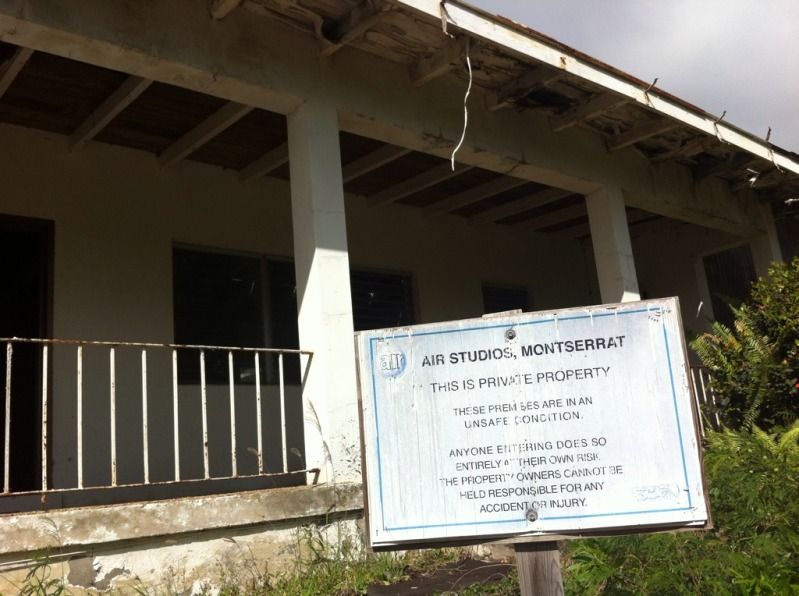
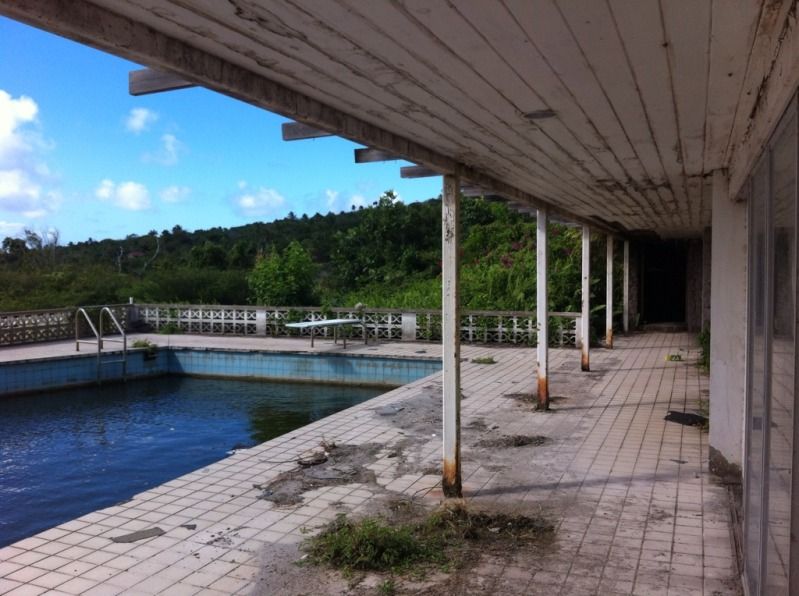
Over the weekend I had the chance to visit what now remains of AIR Studios, located near the Belham Valley. It certainly looks like a ghost of its former self, but one can still certainly appreciate the legacy and the charm it must have held over its many visitors.

The entrance of AIR Montserrat.

Pool included for all those recording breaks.

All that's now left.

It is a somewhat of a shame that a lot of the island's music legacy as been lost on the young people here today, as I have observed from my classes. If only the government here could put in a bit more effort in restoring that by starting to spread awareness of the pivotal role Montserrat once played in - if not the development then at least the production - of what we would call iconic rock music today, I am sure the young people here would embrace it proudly.

Things like putting the Montserrat Cultural Centre to better, more intensive use would only serve to benefit the island's heritage. The only time I stopped by at the centre, the second day I got to the island, it was completely locked shut and the area behind the centre looked slightly overgrown. Yet the Montserrat Tourist Board lists the Cultural Centre as one of the tourist spots to visit. This place could be a perfect location to continue the legacy of AIR Studios and the Beatles - to set up a permanent, constantly-manned exhibition might be a good start.

Friday, February 17, 2012

Volcanoes & Work schemes


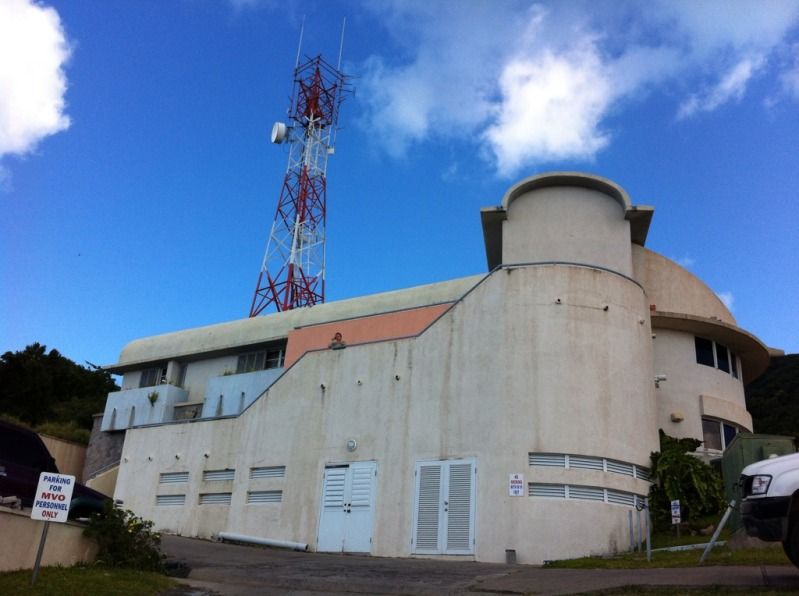
After six weeks on the island, I finally made a trip up to the Montserrat Volcano Observatory (MVO) to pay a visit. Having got to know quite a few scientists and staff who work at MVO, I thought it would be nice to spend my half term holiday up at MVO to see what actually goes on there. Half term here, by the way, is one day. Not one week. Gotta learn how to treasure it!

The MVO's main function, as you can imagine, is to closely monitor volcanic activity coming from the Soufriere Hills volcano, as well as issue travel advisories for the exclusion zone. Although pyroclastic activity has more or less ceased today and eruption continues on a much reduced scale (such as a few rockfalls, etc.), Soufriere Hills has in the past caught Montserrat and its residents by surprise on a number of occasions - with the most severe impact being, of course, the eruption on 25 June 1997 which resulted in the deaths of nineteen people.

Since its eruption began, the volcano has become one of the most closely monitored volcanoes in the world. The MVO takes detailed measurements and reports on its activity to the government and people of Montserrat. A typical MVO visit consists of a self-guided tour and activities include poster displays detailing information about past volcanic activity, a short documentary film and displays of rocks, ash and other artefacts. And of course, stunning views of Soufriere Hills

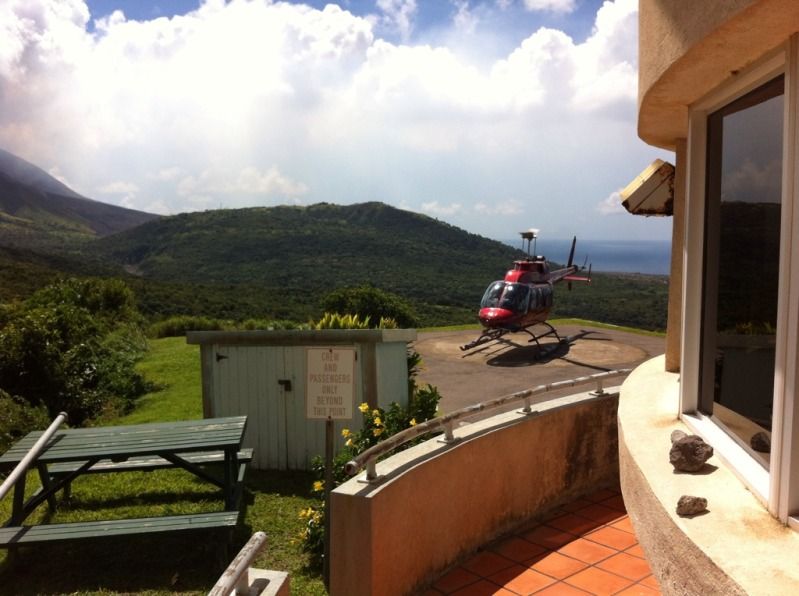
On approach to the MVO.

Every Friday is helicopter day.

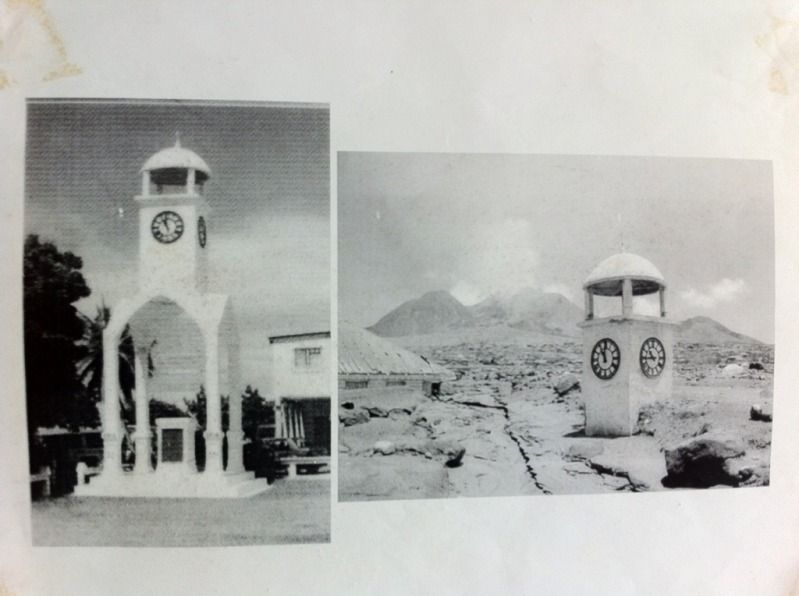
A stark example of how pyroclastic flow destroyed Plymouth.

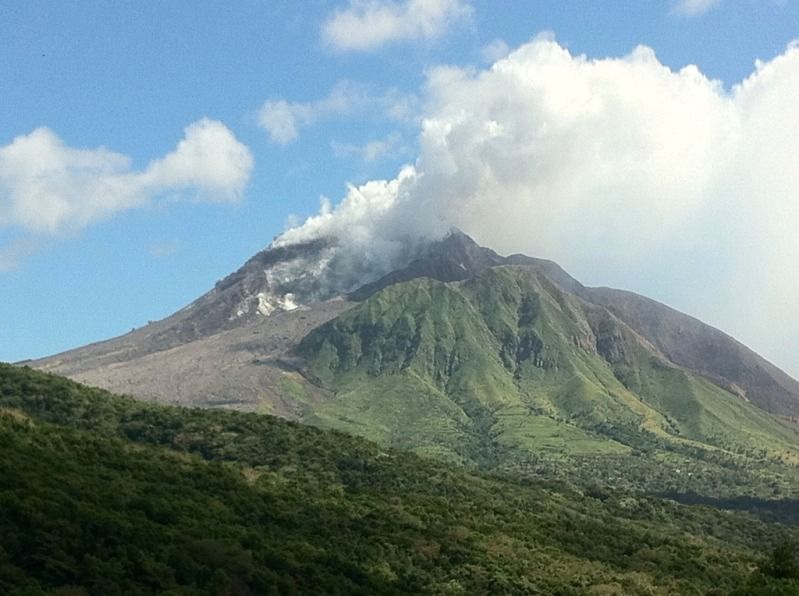
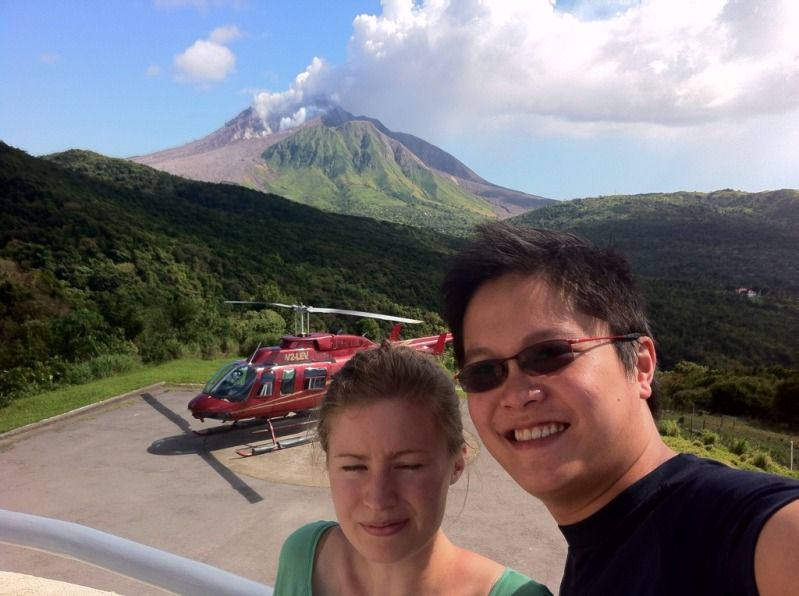
A relatively clear day for volcano admiring.

With Mel, one of the MVO volunteers.

The documentary film was very informative, and showed impressive scenes of Soufriere Hills at its peak in activity - it's hard to imagine how this calm, beautiful scene today can in fact be so immensely beguiling. Compare this to when it was erupting back in 1995 with these pictures here and here.

This past week has gone by relatively quick - with no teaching on Wednesday and Friday due to Parents' Day and half term respectively. I met quite a number of parents on Wednesday, and so far all the feedback has been really positive and encouraging. In actual fact, I realize that the focus what I came here to do initially has shifted quite a bit. Prior to starting work here, I thought I would be running a more after-school based music programme and service. However, the focus has now changed to establishing a music curriculum for Montserrat Secondary School, and implementing a work scheme to be delivered in classrooms.

A lot of this sounds very education- and teacher-based, and it has been indeed. At the moment I am planning and delivering lesson plans for Years 7-9, spread out to a total of 10 different classes. Compared to a normal teaching timetable back home, this is definitely more than a normal full teaching timetable. Combine that with after-school activities such as choir and peripatetic teaching, this translates to a lot of hours spent solely with MSS.

However, given the current state of music education and outreach on the island, it would be hard to establish a 'wider ops'-styled programme when the nucleus of formal music education in schools is yet to be properly established. I have decided that my main aim, for MSS at least, is to sustain a keen level of interest amongst students so that they continuing taking music as a subject option and, finally, take music as an O-level subject in their CXC examinations in Year 11.

This will require a constant occupancy of the role of music specialist in MSS, and I hope this is something that the Foundation is willing to support in the years to come. Having being trained in music education and outreach, as well as workshop skills, has nonetheless helped me immensely in delivering a music curriculum in the classroom - combing different teaching methods and approaches seems to have spurred continual interest amongst students, even though the topics covered could be as basic as music notation.

The current plan is to widen the music subject to Years 10 & 11 as well, however I think this will require at least two full time music specialists within MSS - just like any other regular school in the UK. I think there is a very fine line between 'music teacher' and 'wider-ops workshop leader' here, although I have found both roles to be quite interchangeable most of the time.

In other community-based project news, rehearsals for Volpanics is now in full swing and I'm now in the midst of doing up an arrangement for Big Spender on pan orchestra - which I'm quite excited about. I am also drawing up a proposal to conduct CPD weekends for professional musicians, music educators and music practitioners in Montserrat. Truth be told, setting up new projects can be quite a lengthy affair - ministry officials seem to have quite a pre-defined mindset about how music education, activities and programmes should be conducted, and any new projects always seem to be met with quite a lot of initial apprehension.

I shall now leave you with other scenes I've recently encountered over here - and since a royal visit is approaching, here's an apt photo of Prince of Wales & Duchess of Cornwall's guestbook entry in Government House, the official residence of the governor of Montserrat.

Charles and Camilla leave their mark.

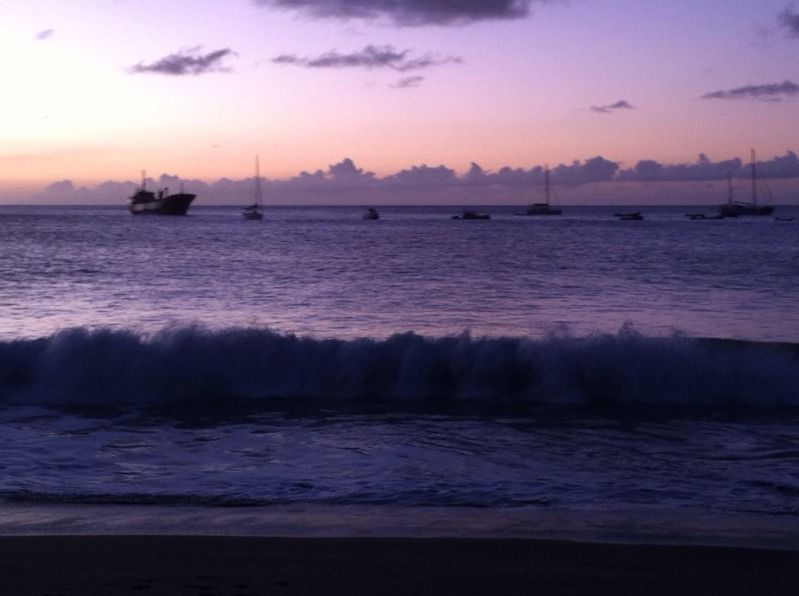
Sunset at Little Bay on Valentine's Day

Tomorrow marks the fifth round of Montserrat Idol - things certainly are heating up! Should you find yourself curious about the ongoings, you can watch scenes on PTVMontserratIdol.com and catch the live stream every Saturday at 1am UTC.

Sunday, February 5, 2012

Radio interviews & Folk dancing

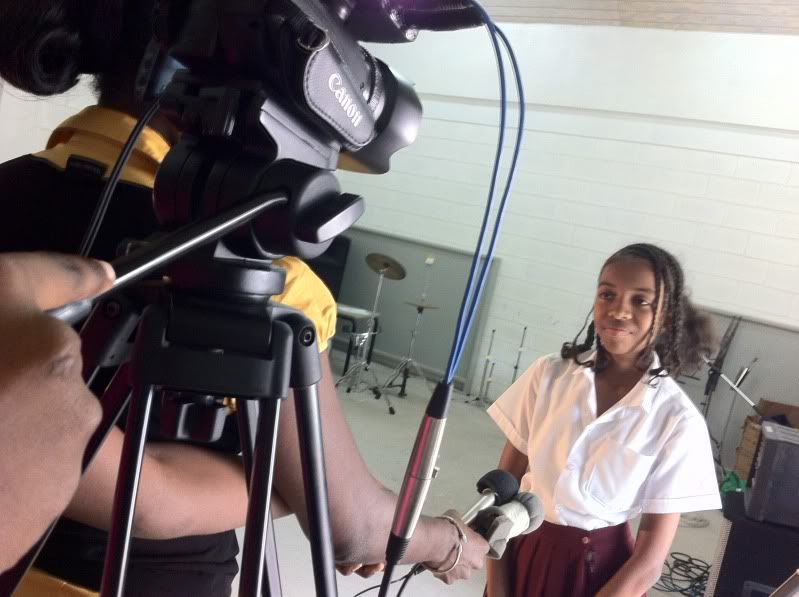
Last Wednesday, ZJB Radio Montserrat paid a visit to the music classrooms to catch a glimpse of some of the Form 1s in the midst of their music lessons, as well as to give some of my students and myself a quick interview. Students were asked about their impression of the music programme so far and what they hope to achieve from it. We talked briefly about my role on the island, what I have set out to achieve and whether there will be someone taking over when I leave in July (of which there will be someone).

A Form 1 student being interviewed.

Students sharing their thoughts.

Lesson activities written out in old-school chalk.

The radio interview was broadcast on the same day an hour later, which I unfortunately missed. In other news, my exploration and familiarization of Montserrat continues, and last week marked the first time I explored Lookout, a big housing 'village' project meant to relocate Montserratians after the last major eruption in 1995. Lookout has quite a young demographic of residents and is quite a hive of community bustle.

Marguerita Bay, adjacent to Lookout.

I have embarked on another community 'cultural' project, this time with Sujoe Davis - the governor's wife. She originally hails from China and is a well-travelled lady who has, along with her husband, served in many different diplomatic posts with the Foreign Office in many various countries around the world. She is also quite a linguist, who fluently speaks Japanese, Teochew, English, Mandarin, and a smattering of Arabic and Thai.

She has proposed that a Xinjiang folk dance be performed during the St Patrick's Day celebrations, with Cupid - the Director of Culture - singing in Mandarin whilst accompanied by a bevy of dancing ladies. Sujoe herself has choreographed the Chinese folk dance routine, and I have been arranging the music and accompanying rehearsals. So far they have been a good laugh, although sooner or later we'll have to buckle down if we want to get that pronunciation sorted out!

Cupid enjoying a wee tease.

Community-based ensembles such as Small Beginnings and Volpanics commence this month, having broken up for Christmas. Workload will certainly increase, and this, however, has not been placated by a somewhat frustrating lack of logistical and administrative support from the school. I am now considering trying to run after-school activities through a more 'community'-based channel through the Ministry of Culture (of which Cupid does a fantastic job in leading it), instead of trying to run them through the school and, indirectly, via the Ministry of Education.